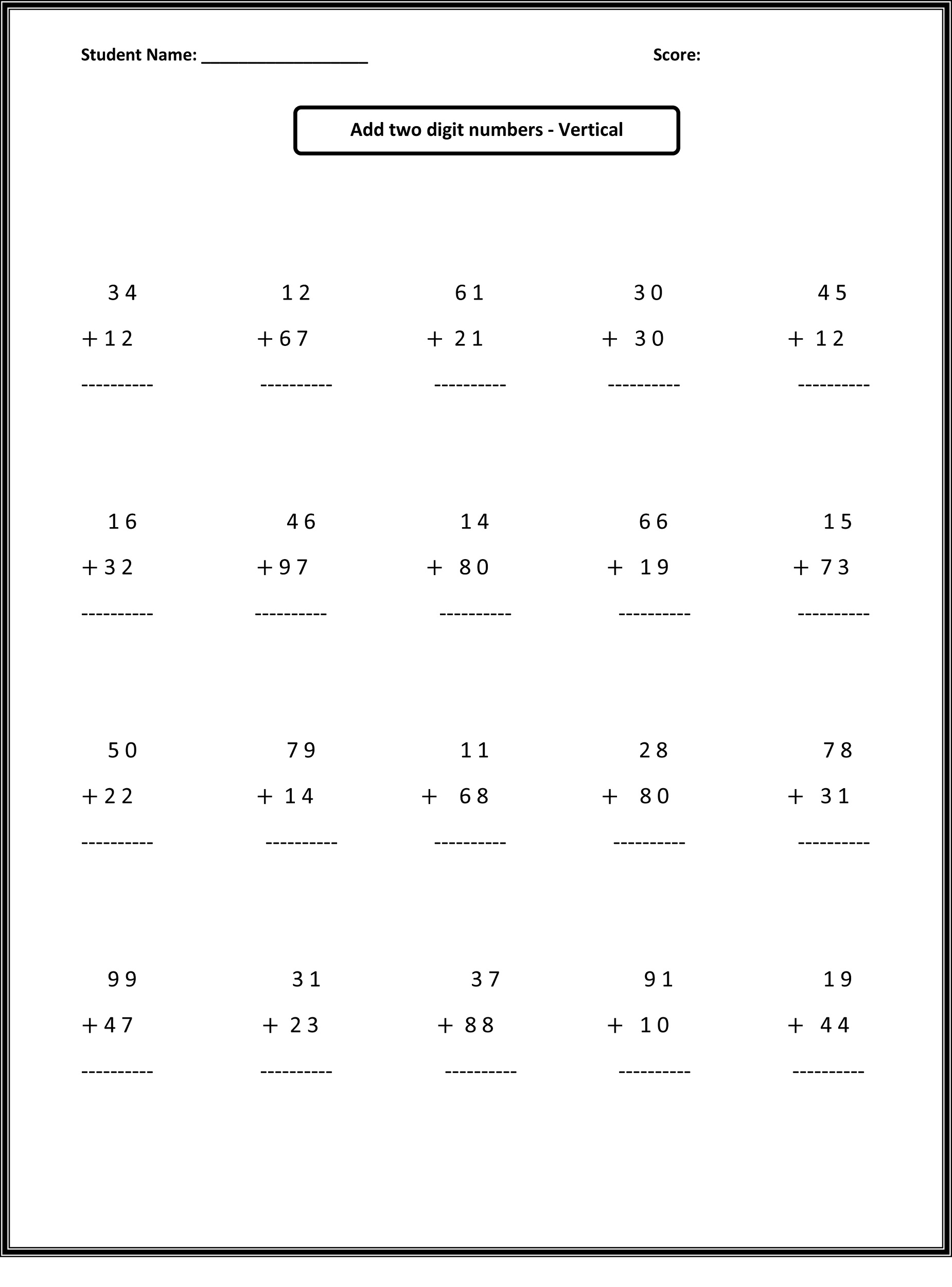
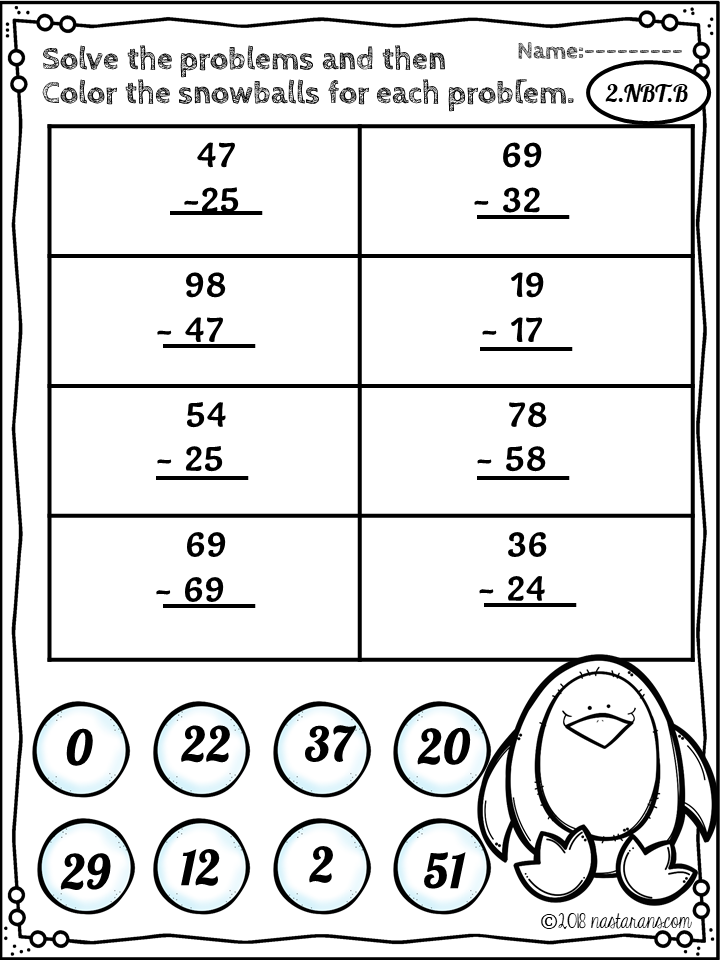
Supplemental mathematical practice is a cornerstone for building a strong educational foundation in young learners. The availability of accessible arithmetic exercises plays a crucial role in reinforcing concepts taught in the classroom, ensuring that foundational understanding solidifies. Such complementary materials are instrumental in bridging potential learning gaps, allowing children to revisit topics at their own pace, and fostering a sense of accomplishment that builds confidence in their numerical abilities. Engaging with targeted learning resources outside of regular schooling hours can significantly enhance comprehension and skill retention, setting the stage for future academic success. Explore more in our Math Worksheets collection.
💡 Educational Key Takeaways:
- Core Skill: Structured Free Printable Math Sheets For 2nd Grade focused on developing pencil grip, stroke control, and early literacy/math confidence.
- Target Scope: Suited for homeschoolers, preschool, kindergarten, and elementary learners.
- Best Recommendation: Practice 10–15 minutes daily with ergonomic writing tools to reinforce muscle memory without hand fatigue.
The key learning outcomes derived from utilizing these educational aids are multifaceted. They effectively support the development of essential computational fluency, improve number sense, and enhance problem-solving skills through repeated exposure to various problem types. These practice materials help children master basic addition and subtraction facts, understand place value, and begin to grasp concepts of time, money, and simple geometry. Furthermore, engaging with these exercises promotes critical thinking as learners strategize to solve problems, and improves attention to detail. The structured repetition offered by these resources is vital for solidifying procedural knowledge, turning abstract concepts into concrete understanding. For more related activities, check out our Adding And Subtracting Using Place Value Worksheets.
Typically, the mathematical practice sets designed for this age group encompass a variety of structures and content to keep young minds engaged. They often feature different question formats, including standard calculation problems, word problems that encourage critical thinking, matching exercises, and opportunities for drawing or coloring. Common topics covered include skip counting, telling time to the nearest five minutes, identifying coins and their values, understanding simple fractions, and exploring basic measurement concepts. The progression within these learning printables is usually designed to gradually increase in complexity, catering to diverse learning styles and skill levels, often incorporating appealing visuals to maintain interest. Discover more free resources across our collection library.
To maximize the utility of these instructional handouts, a structured approach is recommended. First, establish a quiet and focused learning environment, ensuring all necessary tools like pencils and erasers are readily available. Before beginning, a brief review of the concept being practiced can be beneficial, followed by a clear explanation of the instructions. Encourage independent work, allowing the child to attempt problems on their own, but be prepared to offer supportive guidance when challenges arise. After completion, a collaborative review of the answers is highly effective, discussing both correct solutions and any errors to understand the reasoning. Crucially, emphasize effort and progress, offering positive reinforcement to build intrinsic motivation.
Further enhancing learning with these supplementary materials can be achieved through several strategies. Encourage children to verbalize their thought processes while solving problems, which helps in solidifying their understanding and identifying areas of confusion. Connect the mathematical concepts to real-world scenarios, such as counting objects, measuring ingredients, or managing pretend money, to make learning more tangible and relevant. Supplement the printed exercises with hands-on manipulatives, like counting blocks, play clocks, or plastic coins, to provide a tactile learning experience. Consistent, short practice sessions are generally more effective than infrequent, long ones. Exploring related online interactive games or educational videos can also provide an alternative and engaging way to reinforce the same concepts.
The value of readily available numerical practice sheets cannot be overstated. They provide an invaluable resource for parents and educators seeking to support second-grade students in mastering foundational mathematical skills and developing problem-solving capabilities. Accessing these valuable resources empowers children to build confidence, cultivate a positive attitude towards mathematics, and achieve academic excellence. Therefore, exploring the numerous beneficial educational documents available for download and integrating them into a childs learning routine is highly encouraged to foster a robust and lasting understanding of mathematical principles.
Developmental Milestone & Activity Table
| Development Stage | Recommended Daily Duration | Primary Learning Objective |
|---|---|---|
| Preschool & Pre-K | 10 – 15 Minutes | Pencil grip development & basic pre-stroke lines |
| Kindergarten | 15 – 20 Minutes | Letter/number formation & spatial line awareness |
| Early Elementary (Grade 1–2) | 20 – 30 Minutes | Fluency, sentence construction & neatness |
Images References