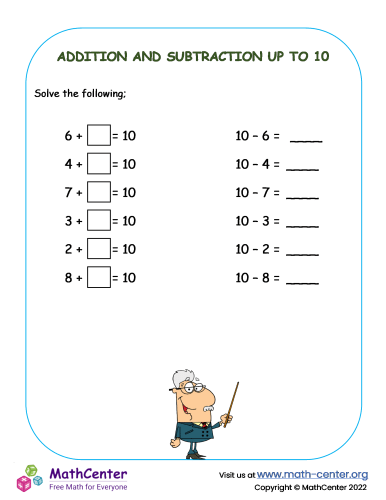
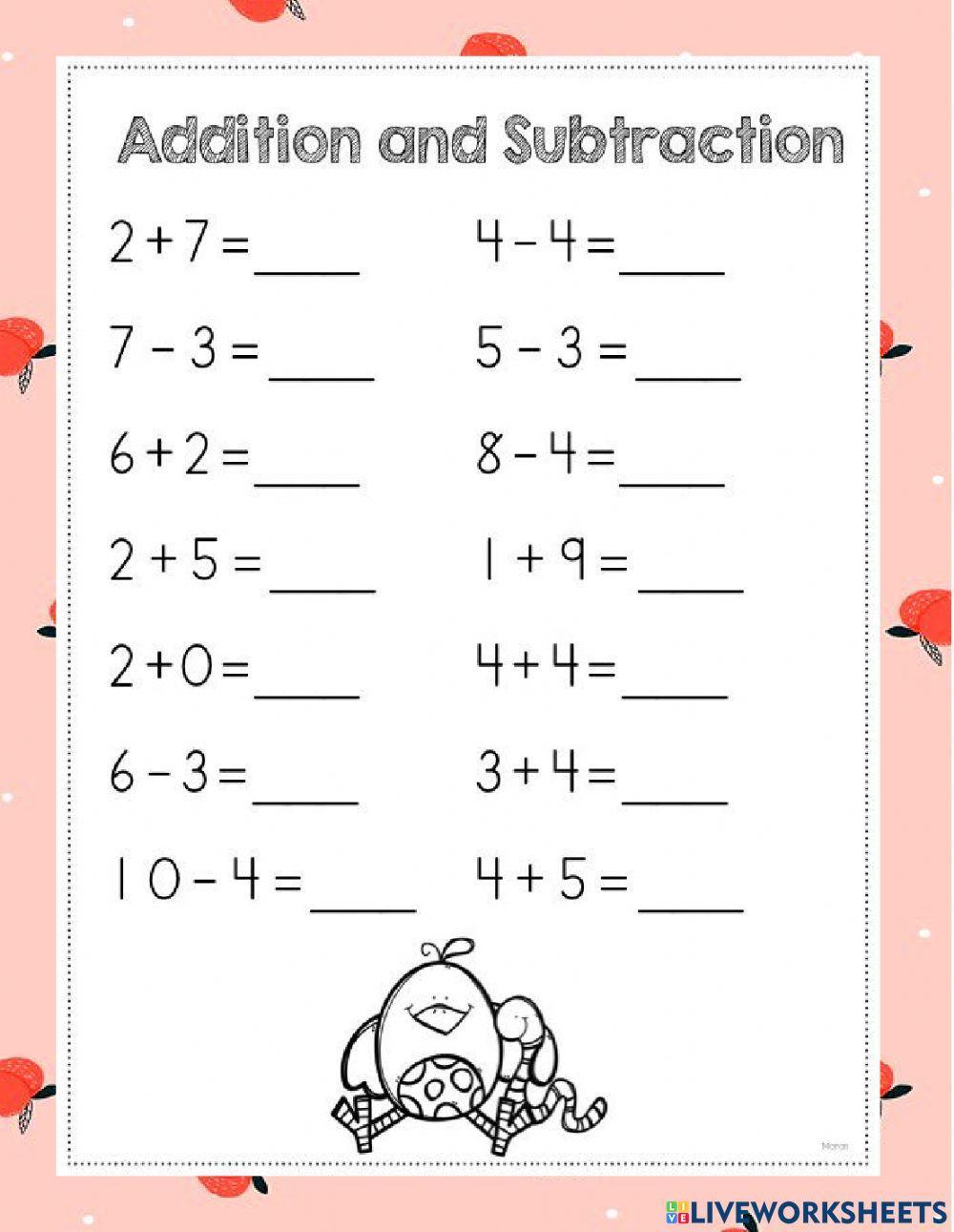
Developing a strong foundation in elementary mathematics is paramount for future academic success. Resources designed to reinforce basic arithmetic skills, particularly within a manageable range like numbers up to ten, serve as crucial tools in this developmental process. These foundational math practice sheets are specifically crafted to introduce and solidify understanding of core operations, paving the way for more complex mathematical concepts and fostering early numerical fluency. Explore more in our Math Worksheets collection.
💡 Educational Key Takeaways:
- Core Skill: Structured Addition And Subtraction Worksheets To 10 focused on developing pencil grip, stroke control, and early literacy/math confidence.
- Target Scope: Suited for homeschoolers, preschool, kindergarten, and elementary learners.
- Best Recommendation: Practice 10–15 minutes daily with ergonomic writing tools to reinforce muscle memory without hand fatigue.
Engaging with such practice materials offers a multitude of benefits. Learners develop a robust sense of number relationships, leading to a deeper comprehension of how quantities combine and separate. Consistent engagement enhances recall of basic facts, improving both accuracy and speed in calculations. This systematic practice also builds confidence, transforming potential math anxiety into an empowering sense of mastery. Furthermore, understanding these fundamental operations within a limited scope establishes the prerequisite knowledge for tackling concepts such as place value, carrying, borrowing, and more advanced problem-solving strategies. For more related activities, check out our Subtracting Worksheets.
Typically, these learning resources feature a clear, uncluttered layout, presenting problems in a straightforward manner. The content often includes a mix of tasks, sometimes separating operations into distinct sections, and at other times interweaving them to promote operational recognition. Problems usually involve finding sums or differences for equations where all numbers involved are ten or less. Common formats include simple equations where the result is missing, or problems requiring the identification of the correct operation. Some versions may also incorporate simple word problems or visual aids to enhance comprehension and engagement. Discover more free resources across our collection library.
To maximize the effectiveness of these educational aids, a structured approach is recommended. Begin by ensuring a clear understanding of the instructions before attempting any problems. Encourage working through the tasks at a comfortable pace, prioritizing accuracy over speed, especially in the initial stages. The use of concrete manipulatives, such as counters or number lines, can be highly beneficial for visualizing the operations and building conceptual understanding. After completing a section, it is vital to review the answers carefully, identifying any errors and understanding the correct solution. Consistent, short practice sessions often yield better long-term retention than infrequent, lengthy ones.
Beyond the immediate practice, integrating these foundational sheets into a broader learning strategy can be highly advantageous. Exploring number bonds and fact families associated with each problem strengthens understanding of inverse operations. Incorporating elements of play, such as gentle timed challenges or positive reinforcement, can maintain engagement and motivation. Complementary resources like flashcards, educational games, and interactive online activities can further enrich the learning experience. As proficiency grows, a gradual progression to practice sheets involving larger numbers or additional operations can ensure continuous skill development.
In conclusion, dedicated practice with these elementary arithmetic resources provides an indispensable foundation for mathematical proficiency. The systematic approach to learning sums and differences within ten cultivates essential numerical skills, boosts confidence, and prepares learners for future academic challenges. Consistent engagement with these valuable tools is highly encouraged to solidify understanding and foster a lifelong appreciation for mathematics. Exploring the wide array of available foundational math practice materials can provide continuous support for this critical learning journey.
Developmental Milestone & Activity Table
| Development Stage | Recommended Daily Duration | Primary Learning Objective |
|---|---|---|
| Preschool & Pre-K | 10 – 15 Minutes | Pencil grip development & basic pre-stroke lines |
| Kindergarten | 15 – 20 Minutes | Letter/number formation & spatial line awareness |
| Early Elementary (Grade 1–2) | 20 – 30 Minutes | Fluency, sentence construction & neatness |
Images References