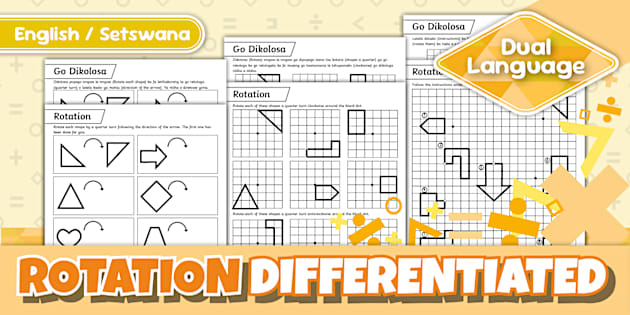
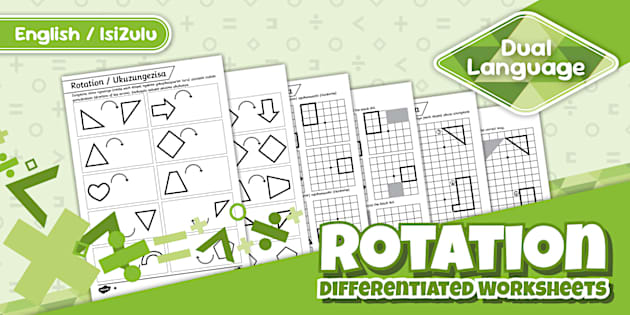
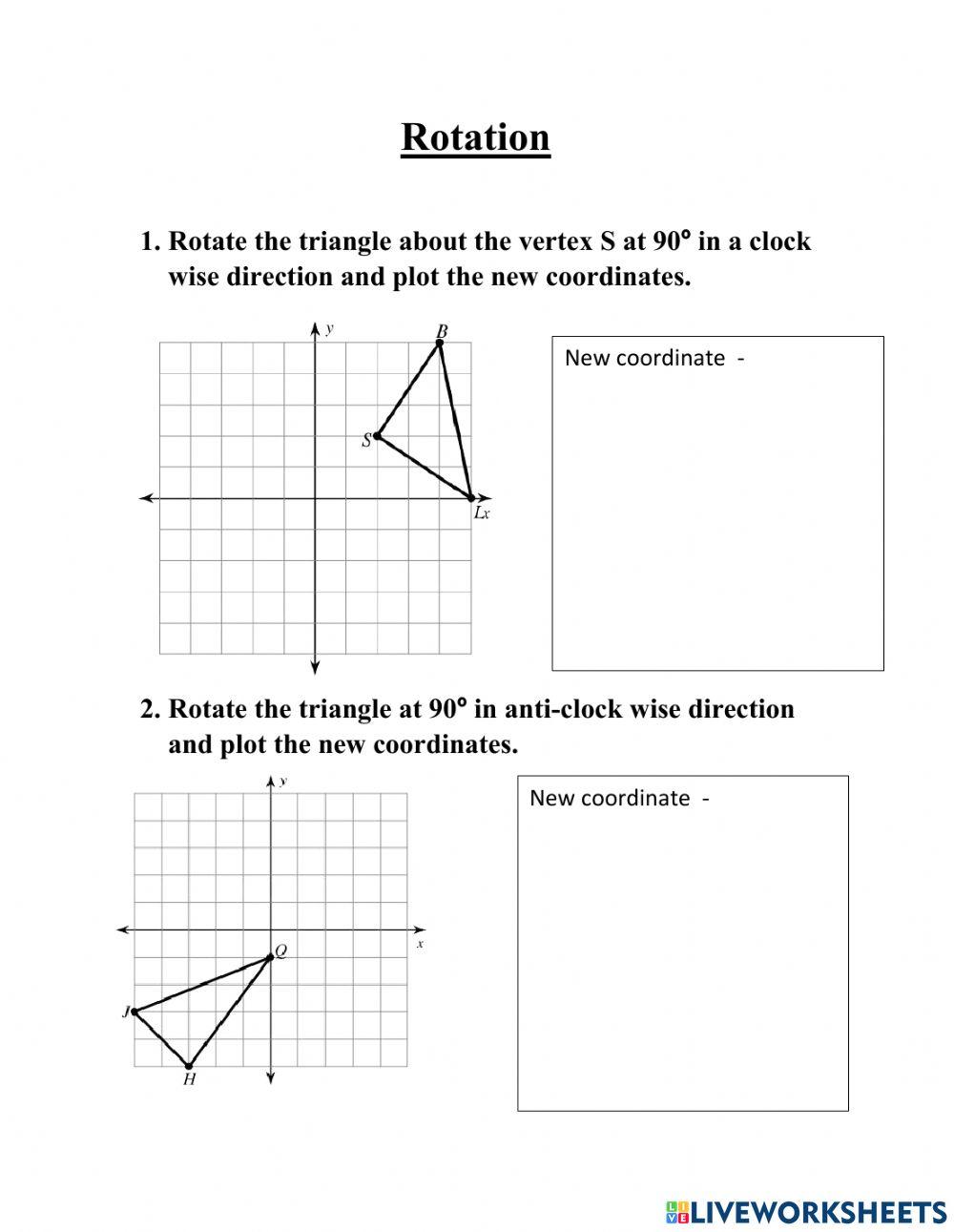
Mastering geometric transformations is a pivotal component of a robust mathematics education, particularly for students in the seventh grade. Understanding concepts like rotation, reflection, and translation builds critical spatial reasoning skills and lays the groundwork for advanced geometry. Specialized instructional materials focused on geometric rotations offer an invaluable opportunity to solidify these foundational principles. Through structured practice, learners can develop a deeper comprehension of how shapes and points move in a coordinate plane, fostering accuracy and analytical thinking. Explore more in our Math Worksheets collection.
💡 Educational Key Takeaways:
- Core Skill: Structured Grade 7 Math Rotation Worksheets focused on developing pencil grip, stroke control, and early literacy/math confidence.
- Target Scope: Suited for homeschoolers, preschool, kindergarten, and elementary learners.
- Best Recommendation: Practice 10–15 minutes daily with ergonomic writing tools to reinforce muscle memory without hand fatigue.
The consistent engagement with these practice sheets provides several key learning outcomes and benefits. Learners gain precision in identifying the center and angle of rotation, accurately mapping pre-images to images. Such exercises enhance problem-solving abilities by requiring the application of specific rules and formulas. Furthermore, the development of critical thinking is fostered as students analyze various rotational scenarios, predict outcomes, and justify their reasoning. This focused practice significantly supports skill development in visualizing geometric changes and strengthens overall mathematical confidence. For more related activities, check out our Free Math Worksheets For 1st Grade.
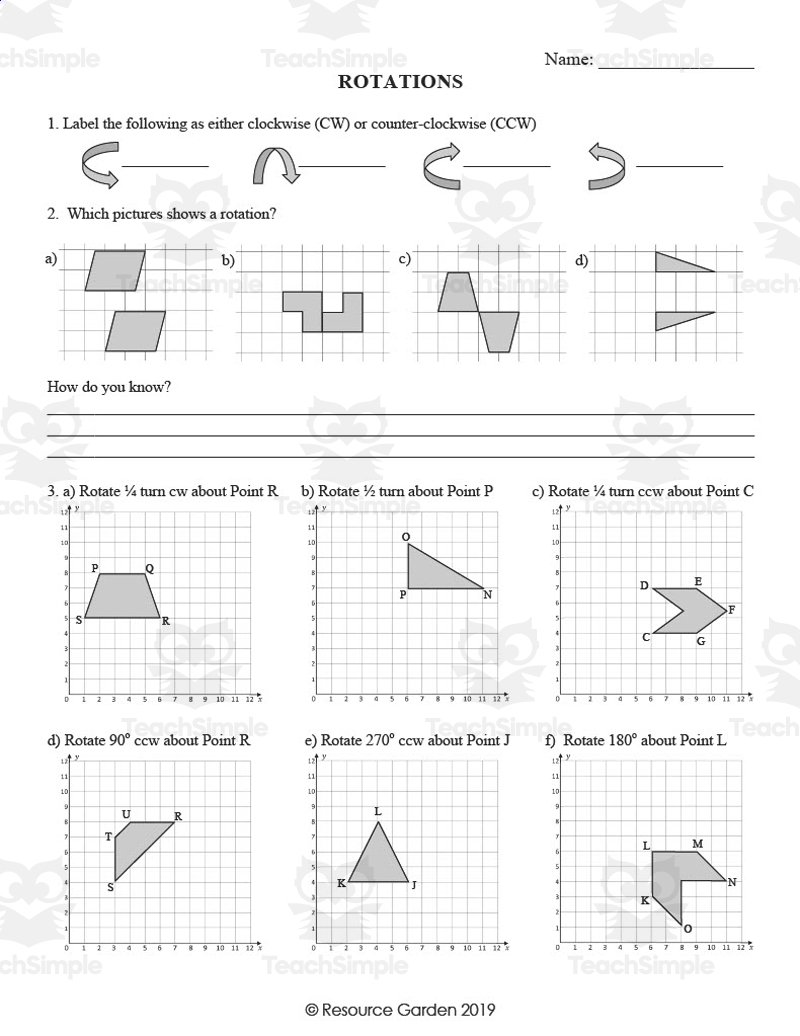
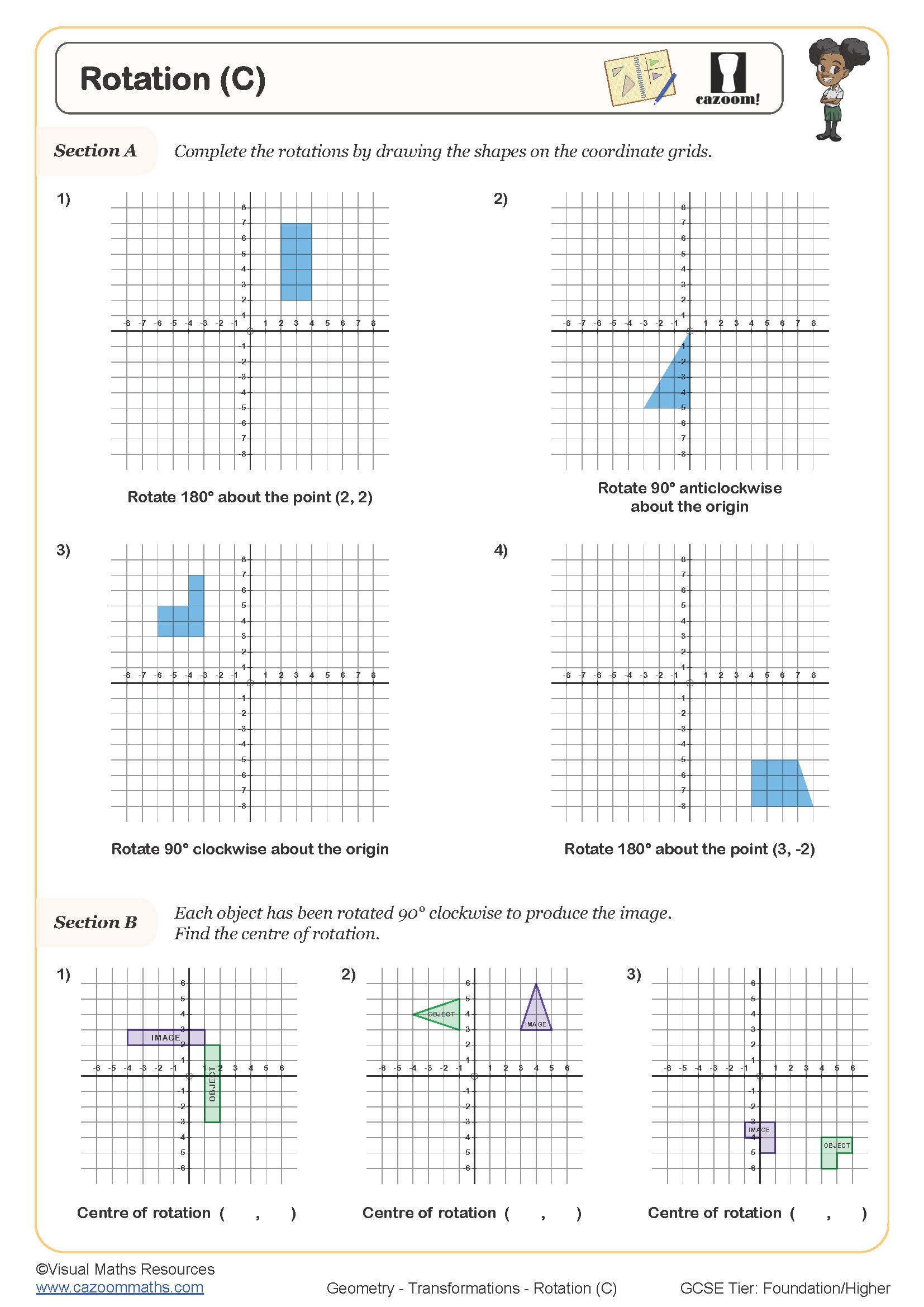
Typically, these educational materials are structured to guide students progressively through the concept of rotation. Content often begins with defining key terms such as the center of rotation, angle of rotation, and the direction (clockwise or counter-clockwise). Subsequent sections usually include problems involving the rotation of individual points on a coordinate plane, followed by the rotation of simple two-dimensional shapes like triangles, squares, and other polygons. Activities may also involve identifying rotational symmetry within figures or determining the characteristics of a rotation given a pre-image and its image. Questions often range in difficulty, ensuring a comprehensive understanding. Discover more free resources across our collection library.
To maximize the effectiveness of these learning aids, a methodical approach is highly recommended. Initially, a thorough review of the fundamental principles of rotation, including coordinate rules for specific rotations (e.g., 90, 180, 270 around the origin), is beneficial. When approaching problems, it is advisable to utilize graph paper and, where necessary, a protractor or tracing paper to visualize the transformations accurately. Working through each problem step-by-step, carefully plotting points and drawing shapes, helps reinforce the process. After completing a set of problems, checking answers and carefully analyzing any discrepancies is crucial for identifying areas requiring further attention. Discussing challenging problems with an instructor or peer can also provide valuable insights and alternative perspectives.
Beyond the primary practice materials, incorporating additional learning strategies can further enhance comprehension. Exploring interactive online tools or using physical manipulatives that demonstrate rotations can provide a dynamic visual experience. It is also advantageous to connect the study of rotations with other geometric transformations, such as reflections and translations, to develop a holistic understanding of how shapes move in space. Consistent practice, even with just a few problems daily, contributes significantly to long-term retention. Should particular aspects of rotation prove challenging, seeking supplementary instructional videos or example problems can offer targeted reinforcement.
The dedicated use of these instructional tools is instrumental in building a strong foundation in seventh-grade geometry. They offer a structured pathway to understanding complex concepts and developing essential analytical skills. Embracing the opportunity for focused practice ensures that learners gain not only proficiency in transformations but also confidence in their mathematical abilities. Exploring these and related practice materials is an excellent strategy for enhancing a student’s journey toward mathematical mastery.
Developmental Milestone & Activity Table
| Development Stage | Recommended Daily Duration | Primary Learning Objective |
|---|---|---|
| Preschool & Pre-K | 10 – 15 Minutes | Pencil grip development & basic pre-stroke lines |
| Kindergarten | 15 – 20 Minutes | Letter/number formation & spatial line awareness |
| Early Elementary (Grade 1–2) | 20 – 30 Minutes | Fluency, sentence construction & neatness |
Images References