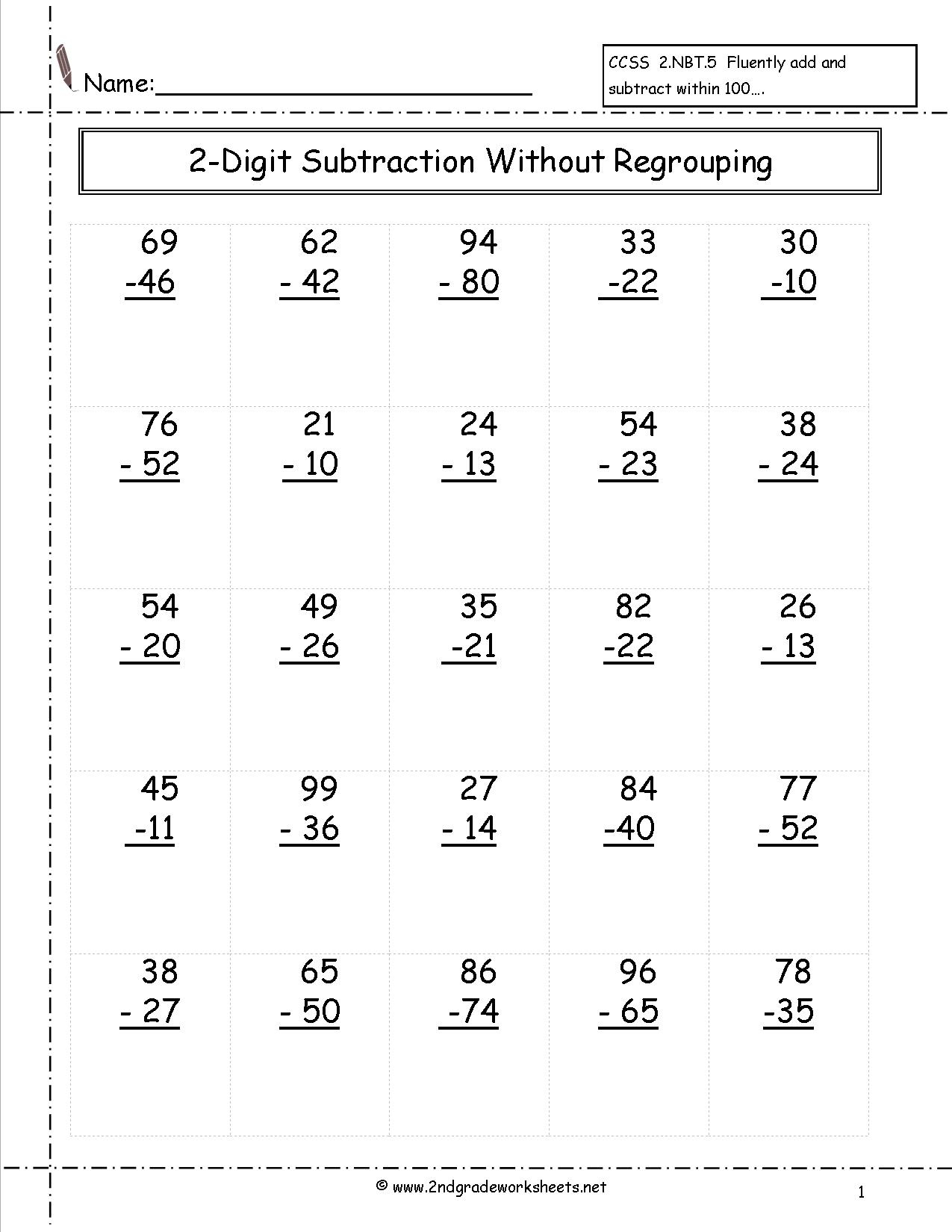
Mastery of fundamental arithmetic operations is a cornerstone of mathematical proficiency. Among these, the ability to perform computations involving fractional numbers that combine whole and proper parts stands out as a particularly vital skill. This specific worksheet serves as an indispensable tool for solidifying comprehension and enhancing practical abilities in this area. It systematically guides learners through the intricacies of manipulating these complex numerical forms, ensuring a thorough understanding that is essential for progressing in mathematics and applying concepts in everyday situations.
💡 Educational Key Takeaways:
- Core Skill: Structured Adding And Subtracting Two Mixed Fractions focused on developing pencil grip, stroke control, and early literacy/math confidence.
- Target Scope: Suited for homeschoolers, preschool, kindergarten, and elementary learners.
- Best Recommendation: Practice 10–15 minutes daily with ergonomic writing tools to reinforce muscle memory without hand fatigue.
Engaging with this resource offers numerous significant benefits, extending beyond mere calculation. It significantly supports the development of critical thinking by requiring careful analysis of number structures and strategic planning for computation. Learners will enhance their numerical fluency, building confidence in handling various forms of rational numbers. This practice also strengthens problem-solving capabilities, as many real-world scenarios necessitate these exact numerical manipulations. Ultimately, a solid grasp of these operations forms an essential building block for algebra, geometry, and higher-level scientific applications. Related guide: Math Sheets Addition.
The worksheet is meticulously structured to facilitate progressive learning. It typically begins with foundational exercises, ensuring proficiency in converting between compound fractions and improper fractions, a crucial prerequisite. Subsequent sections then introduce problems requiring the combination or separation of these fractional numbers, often starting with those sharing common denominators and gradually advancing to problems that require finding equivalent fractions with a least common denominator. The activities might also include word problems, encouraging the application of these skills in practical contexts, reinforcing understanding of when and how to apply these operations effectively. Browse more guides on Cheap Worksheets.
To maximize the learning potential of this worksheet, a structured approach is recommended. Begin by reviewing the basics of finding equivalent fractions and determining the least common multiple for denominators. When solving problems, consistently convert all compound fractional numbers into improper fractions first. This simplifies the process of finding a common denominator and performing the core operation. Always show all intermediate steps, as this helps in identifying potential errors and reinforces the procedural knowledge. After completing the operation, convert the improper fraction back into a compound fractional number if appropriate, and always simplify the fractional part to its lowest terms. Carefully review each answer to ensure accuracy and procedural correctness.
For further reinforcement and deeper understanding, consider these additional insights. Practice estimating the answer before performing the exact calculation; this develops a stronger number sense and helps in quickly identifying unreasonable results. Utilize visual aids, such as fraction bars or circles, to conceptualize the process of combining or separating fractional parts. If challenges arise with finding common denominators, dedicate additional practice to worksheets specifically focused on least common multiples and equivalent fractions. Exploring resources that offer step-by-step examples can also provide clarity and alternative problem-solving perspectives, strengthening the overall learning experience.
Mastering computations with combined whole and fractional parts is a fundamental achievement in mathematics, opening doors to more advanced concepts and practical applications. The dedicated practice provided by this worksheet is invaluable for building this essential skill set. It empowers learners with the confidence and precision needed to tackle a wide array of mathematical challenges. Exploring and utilizing this resource, alongside other related materials, is strongly encouraged to cultivate a robust and lasting understanding of these crucial numerical operations.
Developmental Milestone & Activity Table
| Development Stage | Recommended Daily Duration | Primary Learning Objective |
|---|---|---|
| Preschool & Pre-K | 10 – 15 Minutes | Pencil grip development & basic pre-stroke lines |
| Kindergarten | 15 – 20 Minutes | Letter/number formation & spatial line awareness |
| Early Elementary (Grade 1–2) | 20 – 30 Minutes | Fluency, sentence construction & neatness |