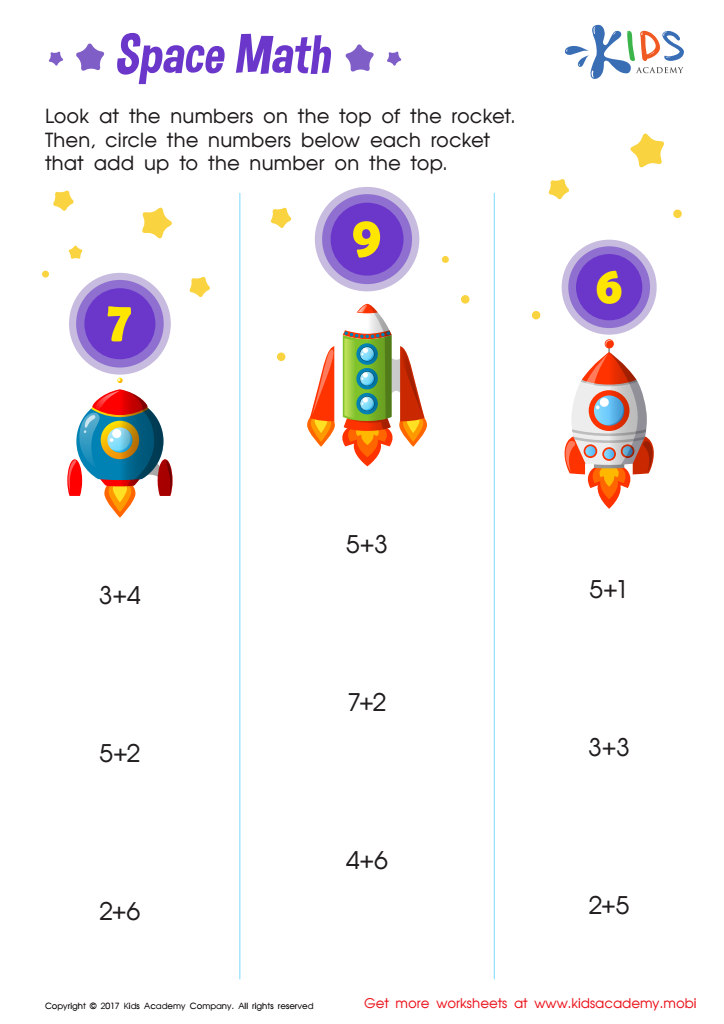
Introduction and Importance of Challenging Addition Problems
Developing proficiency in arithmetic is a fundamental aspect of mathematical education. Engaging with exercises designed to stretch computational abilities significantly contributes to a student’s overall understanding of number sense and mathematical reasoning. These exercises, which push learners beyond rote memorization, foster a deeper comprehension of mathematical principles. They serve as crucial building blocks for more advanced mathematical concepts, such as algebra, calculus, and statistics. The benefits extend beyond the classroom, proving invaluable in everyday life, from managing personal finances to making informed decisions based on quantitative data. The ability to confidently and accurately solve problems empowers individuals to approach numerical challenges with greater assurance and analytical skill. Incorporating such exercises into a learning routine cultivates resilience, critical thinking, and a lasting appreciation for the power and elegance of mathematics, creating a strong foundation for future academic and professional success, regardless of the chosen field of study. Therefore, embracing these challenges is an investment in a more numerate and confident future.
💡 Educational Key Takeaways:
- Core Skill: Structured Challenging Addition Problems focused on developing pencil grip, stroke control, and early literacy/math confidence.
- Target Scope: Suited for homeschoolers, preschool, kindergarten, and elementary learners.
- Best Recommendation: Practice 10–15 minutes daily with ergonomic writing tools to reinforce muscle memory without hand fatigue.
Structure and How It Works
The worksheet is structured to systematically enhance addition skills through varied exercises and interactive elements. It begins with a graded progression of difficulty, starting with problems that reinforce foundational skills and gradually introducing more complex scenarios. Core Exercises: These exercises typically involve multi-digit addition, often incorporating regrouping techniques. This section emphasizes accuracy and speed, encouraging learners to refine their calculation methods. Word Problems: Application of learned skills in real-world contexts is fostered through word problems, challenging individuals to identify the underlying mathematical structure and translate it into an equation. Interactive Elements: The inclusion of visual aids, such as number lines and manipulatives, is intended to provide additional support and encourage hands-on learning. The worksheet may also incorporate patterns and puzzles to make the learning experience more engaging and enjoyable. Furthermore, answer keys are typically provided to facilitate self-assessment and independent learning, allowing for immediate feedback and identification of areas that require further attention. This structured approach ensures a comprehensive and well-rounded development of addition proficiency.
Tips and Complementary Resources
Effective utilization of the worksheet requires a strategic approach to maximize learning outcomes. Daily Practice Tips: Consistent, short bursts of practice are more effective than infrequent, longer sessions. Dedicate a specific time each day to work through a set number of problems. Create a dedicated learning environment, free from distractions, to promote focus and concentration. Pairing with Other Resources: Supplementing the worksheet with other learning materials can further enhance understanding. Utilize online tutorials, educational videos, or interactive games to reinforce concepts. Consider using manipulatives, such as counters or blocks, to visualize the addition process. Collaboration with peers or a tutor can provide additional support and diverse perspectives. Regularly review previously completed problems to reinforce retention and identify areas that need further attention. Remember that persistence and a positive attitude are key to mastering any mathematical skill. Focus on understanding the underlying concepts rather than simply memorizing procedures. Embrace mistakes as opportunities for learning and growth.
Conclusion
Engaging with these types of worksheets offers significant advantages in mathematical development. It builds a solid foundation in arithmetic, fostering both accuracy and speed in calculations. The exercises encourage critical thinking and problem-solving skills, essential for success in mathematics and beyond. Mastering the concepts through practice and focused attention builds confidence and a positive attitude towards mathematics. The structured format and inclusion of real-world applications make the learning process both effective and engaging. It equips individuals with the ability to tackle numerical challenges with greater assurance. Beyond this particular worksheet, exploring related materials such as those focusing on subtraction, multiplication, and division, can contribute to a more comprehensive understanding of basic arithmetic. Individuals are encouraged to incorporate this resource into their learning routine and actively work through the problems. Consistent effort and a dedication to understanding the underlying concepts will lead to significant improvements in mathematical proficiency.
Developmental Milestone & Activity Table
| Development Stage | Recommended Daily Duration | Primary Learning Objective |
|---|---|---|
| Preschool & Pre-K | 10 – 15 Minutes | Pencil grip development & basic pre-stroke lines |
| Kindergarten | 15 – 20 Minutes | Letter/number formation & spatial line awareness |
| Early Elementary (Grade 1–2) | 20 – 30 Minutes | Fluency, sentence construction & neatness |
Images References :
Discover more printable learning activities by visiting our full Fun and Seasonal Math Worksheets archive for teachers, homeschoolers, and parents.