

Introduction and Importance of Multiplication Aids
Mastering multiplication facts is a foundational skill that significantly impacts mathematical proficiency. A strong grasp of multiplication empowers individuals to solve complex problems with greater ease and confidence, building a solid base for advanced concepts such as algebra and calculus. This proficiency is crucial not only in academic settings but also in everyday life, from managing finances to making informed decisions about purchases and time management. Utilizing readily accessible learning tools can significantly accelerate this process, providing a structured and engaging way to internalize these essential facts at home, in the classroom, or during self-study sessions. These tools offer a flexible and adaptable approach, allowing learners to progress at their own pace and reinforce their understanding through repetitive practice. This leads to improved recall speed and overall mathematical fluency, which are indispensable assets for academic and professional success.
💡 Educational Key Takeaways:
- Core Skill: Structured Free Multiplication Flash Cards Printable focused on developing pencil grip, stroke control, and early literacy/math confidence.
- Target Scope: Suited for homeschoolers, preschool, kindergarten, and elementary learners.
- Best Recommendation: Practice 10–15 minutes daily with ergonomic writing tools to reinforce muscle memory without hand fatigue.
Structure and How It Works
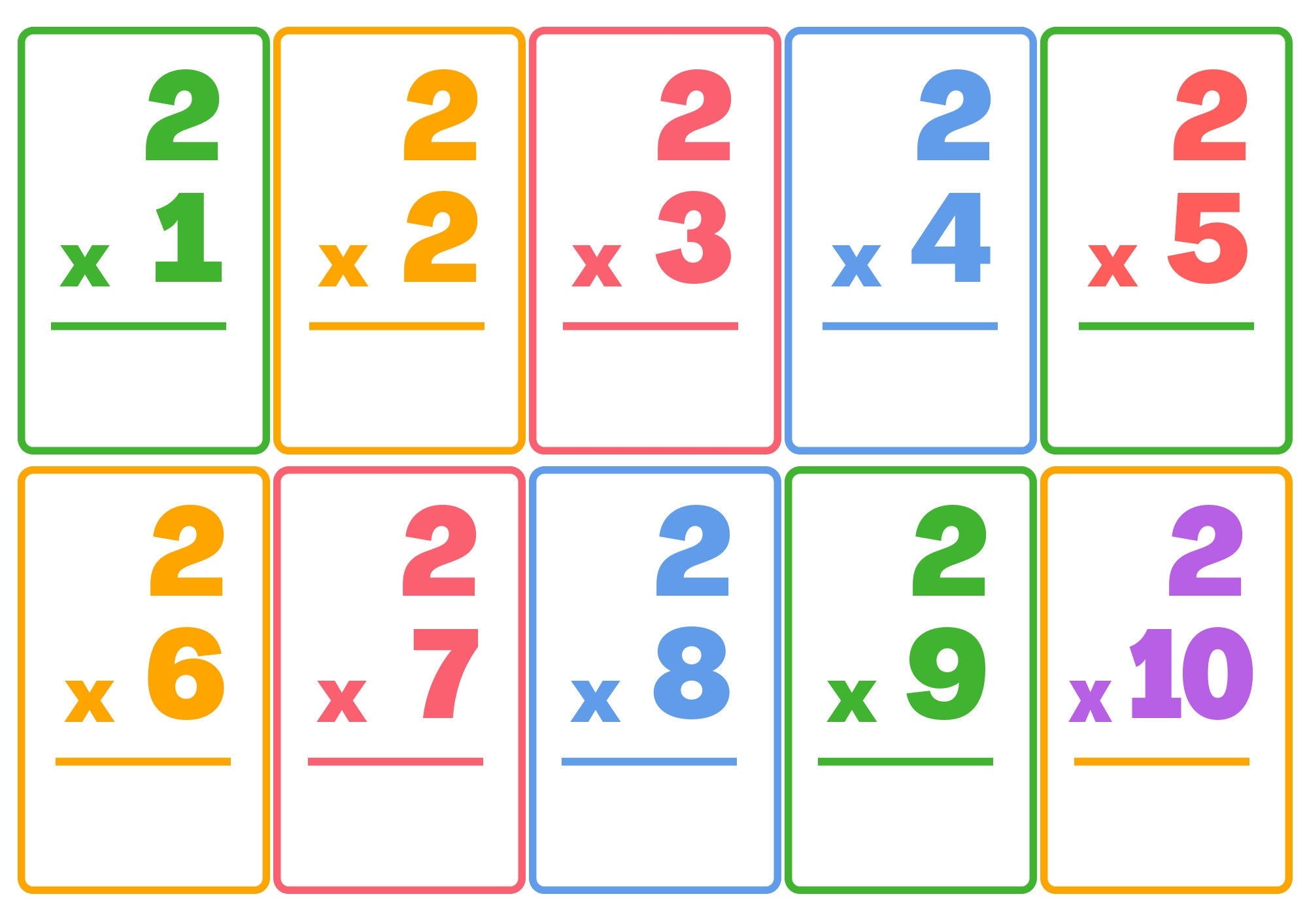
A typical set of these learning materials is designed for clarity and ease of use, enabling learners of all ages to navigate them effectively. The standard layout usually features individual cards, each presenting a multiplication problem on one side and the corresponding answer on the reverse. Core Exercises: The primary activity involves reviewing the problem side of the card and attempting to recall the answer. After making an attempt, the learner can flip the card to check their accuracy. Repetition of this process reinforces memory and builds fluency. Sets often include all multiplication facts from 1×1 up to 12×12, allowing for comprehensive coverage of essential times tables. Interactive Elements: Some sets may incorporate visual aids such as colorful backgrounds or illustrations to make the learning process more stimulating. These visual cues can aid memory and keep learners engaged, particularly those who benefit from visual learning styles. Furthermore, the physical act of handling the cards can make the learning process more tactile and interactive than simply memorizing facts from a list. Related guide: Domino Worksheets For Kindergarten.
Tips and Complementary Resources
To maximize the benefits, it is essential to use a structured approach. Daily Practice Tips: Dedicate a specific time each day for review, even if it’s just for 10-15 minutes. Consistency is key to building fluency. Start with the easier facts and gradually progress to more challenging ones. Encourage learners to track their progress and celebrate their successes. Create a positive and supportive learning environment to foster confidence. Pairing with Other Resources: Consider using these materials in conjunction with online games, worksheets, and other educational resources. This varied approach can help reinforce learning and prevent boredom. Many websites offer interactive multiplication games that provide a fun and engaging way to practice skills. Additionally, printable worksheets can be used to assess understanding and identify areas where additional practice is needed.
Conclusion
The effective use of learning tools provides a powerful avenue for building foundational mathematical skills. The benefits extend beyond improved test scores, fostering a deeper understanding and appreciation for mathematics. The structured approach, combined with consistent practice, leads to enhanced memory, increased fluency, and greater confidence in problem-solving abilities. This confidence permeates all areas of academic and professional life. Therefore, encourage regular and dedicated use of these learning materials to unlock mathematical potential and set the stage for future success. Consider complementing this resource with division aids or fraction worksheets to build a comprehensive understanding of fundamental arithmetic principles. Ultimately, a well-rounded approach to mathematics education empowers individuals to excel in all aspects of their lives.
Visual Reference Gallery


Developmental Milestone & Activity Table
| Development Stage | Recommended Daily Duration | Primary Learning Objective |
|---|---|---|
| Preschool & Pre-K | 10 – 15 Minutes | Pencil grip development & basic pre-stroke lines |
| Kindergarten | 15 – 20 Minutes | Letter/number formation & spatial line awareness |
| Early Elementary (Grade 1–2) | 20 – 30 Minutes | Fluency, sentence construction & neatness |
Images References :
Discover more printable learning activities by visiting our full Fun and Seasonal Math Worksheets archive for teachers, homeschoolers, and parents.


