Introduction and Importance of Combining Basic Arithmetic with Coloring Activities
The integration of basic arithmetic with coloring activities provides a fun and engaging method for young learners to develop foundational mathematical skills. This approach is particularly beneficial at home, in school, or as a self-study tool, offering a stress-free environment where children can learn and reinforce addition concepts. Through this method, the abstract nature of numbers and equations transforms into a visually appealing and interactive experience, making the learning process more accessible and enjoyable. The combination of these two activities promotes cognitive development by engaging different areas of the brain. It helps improve number recognition, fine motor skills, and the ability to follow instructions, contributing to a well-rounded learning experience. This approach also allows for individualized learning, as children can progress at their own pace, focusing on areas where they need extra support. Furthermore, the sense of accomplishment derived from completing each activity boosts confidence and fosters a positive attitude toward mathematics.
💡 Activity Key Takeaways:
- Core Focus: Printable Simple Addition Color By Number designed for creative expression and fine-motor coordination.
- Target Scope: Ideal for toddlers, preschool, kindergarten, and classroom art activities.
- Best Recommendation: Use standard heavy printer paper (24–28 lb) or cardstock for vibrant results with crayons, colored pencils, or washable markers.
Structure and How It Works
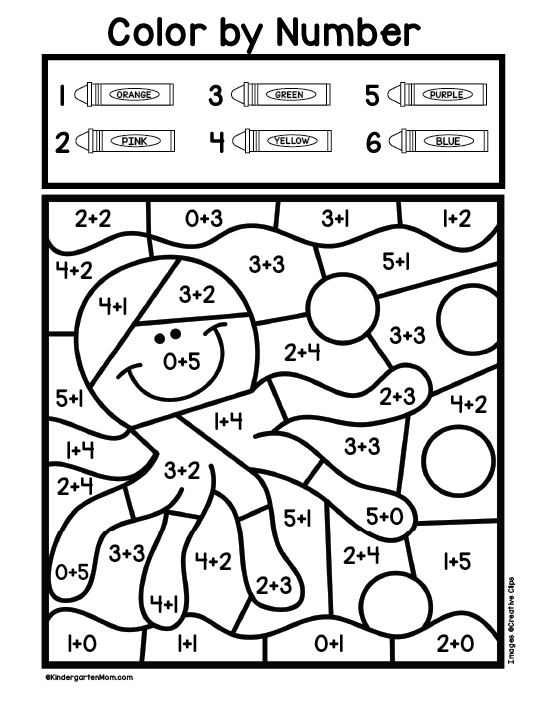
This type of worksheet typically features a series of numbered sections, each corresponding to a simple addition problem. Upon solving an addition equation, the student identifies the corresponding number on the color key and applies the appropriate color to the area marked with that number. Core Exercises: The core of the exercise involves basic addition problems, such as single-digit additions, presented within a visually appealing image. Interactive Elements: The worksheet incorporates a picture divided into numbered sections. Each number corresponds to the solution of an addition problem. The student’s task is to solve the equations and then use the color key to fill in the sections with the correct colors, gradually revealing the complete image. This format not only reinforces mathematical skills but also enhances color recognition and fine motor skills. By solving these problems, children get instant feedback when they color the matching section of the image. The visual reward system helps to encourage persistence.
Tips and Complementary Resources
To maximize the effectiveness of this activity, consider incorporating some practical tips and supplementary resources. Daily Practice Tips: Regular, short sessions are more effective than infrequent, long ones. Aim for consistent practice of 15-20 minutes per day. The child needs to focus on accuracy and understanding the addition process. It can be used for children to reinforce basic addition skills and develop a positive attitude towards math. Pairing with Other Resources: Enhance the learning experience by combining this activity with other math resources, such as number charts, flashcards, or online math games. For a multi-sensory learning experience, use physical manipulatives like counters or blocks to represent the addition problems. Consider introducing word problems to provide context and show the real-world application of addition skills.
Conclusion
The blending of simple addition practice with coloring activities offers a multitude of benefits for young learners. It transforms the often daunting task of learning basic arithmetic into a fun, engaging, and rewarding experience. By incorporating visual and tactile elements, it reinforces number recognition, problem-solving skills, and fine motor coordination, while also fostering a positive attitude toward mathematics. It also provides instant feedback and encourages independent learning, making it an invaluable resource for both educators and parents. By encouraging regular use of these worksheets, alongside complementary resources, it helps young learners build a solid foundation in arithmetic and develop a lifelong love for learning. Similar resources include shape-based activities, number sequence puzzles, and interactive math games that further enhance foundational math skills.
Key Specifications & Age-Group Overview
| Age / Grade Group | Target Skill Focus | Recommended Medium |
|---|---|---|
| Toddlers (Ages 2–4) | Hand-eye coordination & broad motor grasp | Jumbo crayons & washable finger paints |
| Early Elementary (Ages 5–7) | Line boundaries & fine pencil control | Standard colored pencils & fine-tip markers |
| Intermediate (Ages 8+) | Color blending, shading & artistic patience | Watercolor pencils, gel pens & dual-brush markers |
Images References :
Discover more printable learning activities by visiting our full Shape and Color Worksheets archive for teachers, homeschoolers, and parents.