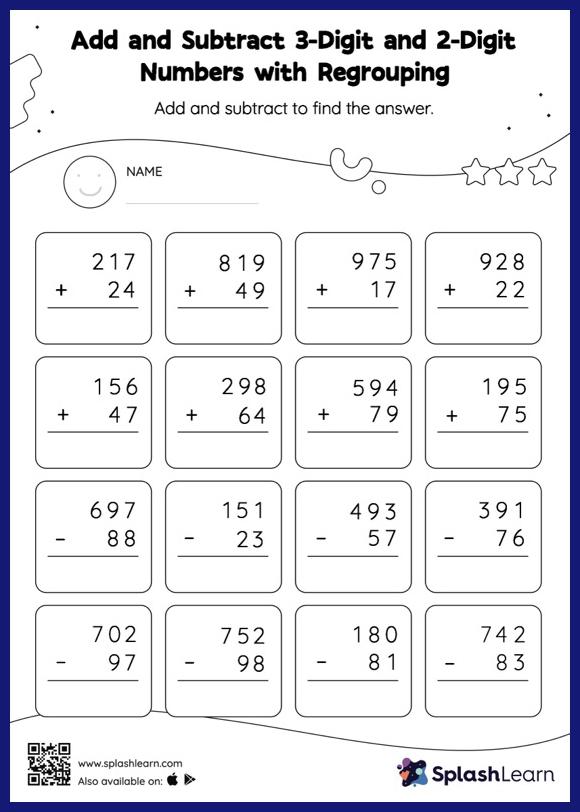
Introduction and Importance of Early Number Story Challenges
Early exposure to mathematical number stories fosters crucial problem-solving abilities in young learners. These challenges move beyond rote memorization of facts, encouraging children to apply their understanding of addition, subtraction, and other foundational concepts in practical scenarios. Engaging with these problems helps build a solid base for future mathematical learning and develops critical thinking capabilities that extend beyond the classroom. It provides an opportunity for young students to interpret information, formulate strategies, and arrive at logical solutions. Introducing these tasks early on can spark an interest in mathematics, making learning an enjoyable and rewarding experience. The ability to extract relevant information from a narrative and translate it into a mathematical equation is a vital life skill. Moreover, success in solving these challenges contributes to increased confidence and a positive attitude towards tackling more complex problems later in their academic journey. This early foundation in problem-solving sets the stage for success in future STEM-related fields.
💡 Educational Key Takeaways:
- Core Skill: Structured Year 1 Maths Word Problems focused on developing pencil grip, stroke control, and early literacy/math confidence.
- Target Scope: Suited for homeschoolers, preschool, kindergarten, and elementary learners.
- Best Recommendation: Practice 10–15 minutes daily with ergonomic writing tools to reinforce muscle memory without hand fatigue.
Structure and How It Works
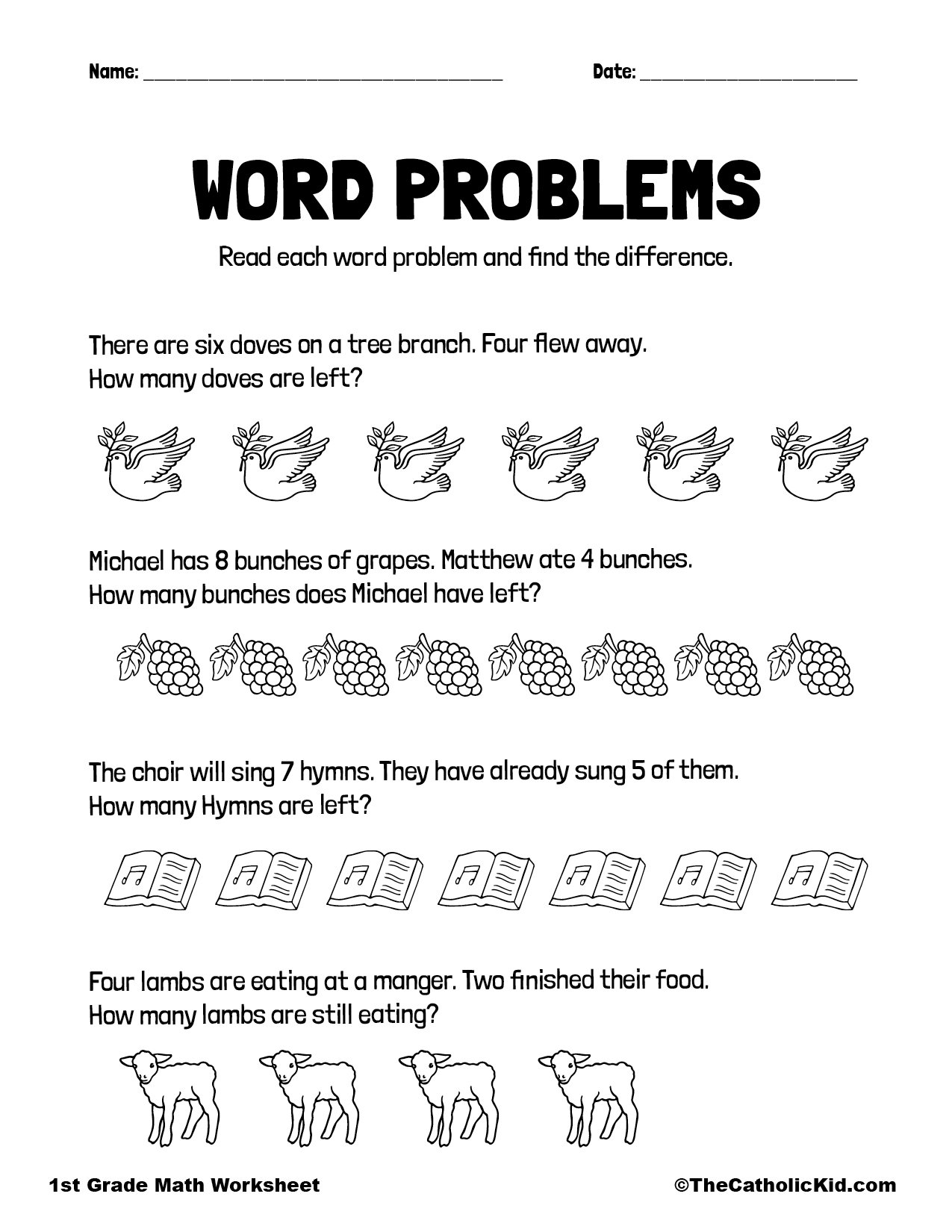
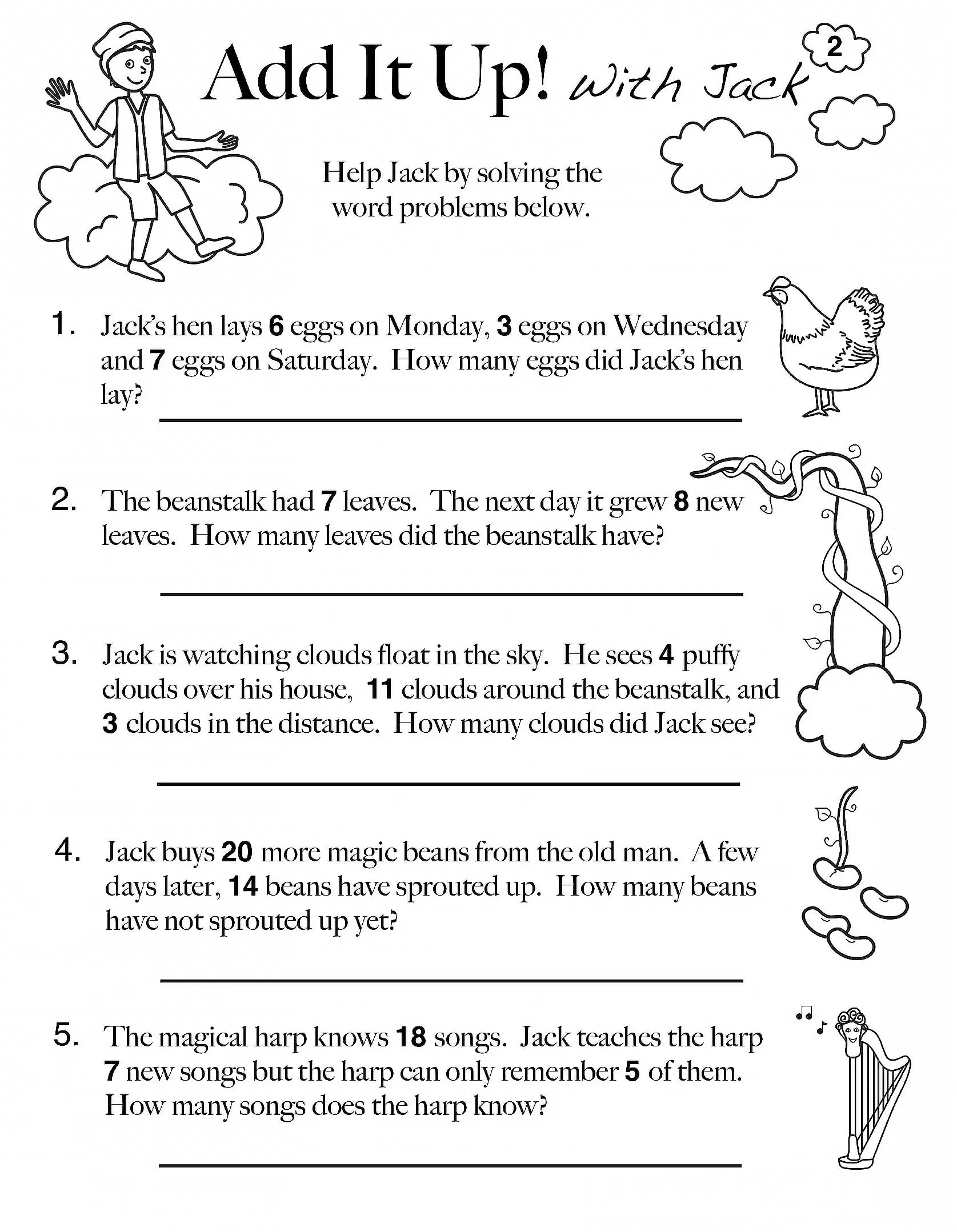
A typical resource designed to build mathematical narrative skills for six-year-olds often incorporates a clear and structured layout to facilitate understanding. Core Exercises: These usually begin with simple addition and subtraction scenarios, gradually increasing in complexity. The problems are often presented with visual aids, such as pictures or diagrams, to help children visualize the situation. Interactive Elements: Worksheets may include opportunities for students to draw pictures to represent the problem or use manipulatives like counters or blocks. Questions are carefully worded to avoid ambiguity and focus on specific mathematical concepts. The resources frequently offer differentiated activities, allowing for adaptation to individual learning needs. Some worksheets may incorporate a number line to support calculations. The inclusion of “check your work” sections allows students to review their solutions and identify any errors. The design prioritizes a child-friendly interface, using bright colors and engaging illustrations to maintain interest and motivation. Finally, a section dedicated to word problems requiring multiple steps are included to improve children’s ability to analyse complex problems and solve them with ease.
Tips and Complementary Resources
To maximize the effectiveness of these learning aids, a consistent and supportive approach is key. Daily Practice Tips: Short, focused sessions are more beneficial than infrequent, lengthy ones. Encourage children to read the question aloud and underline key information. Promote the use of physical objects or drawings to represent the problem. Focus on understanding the problem-solving process rather than just finding the right answer. Celebrate effort and progress, rather than solely focusing on correctness. Pairing with Other Resources: These worksheets can be effectively supplemented with online math games, interactive storybooks, and real-world activities, such as counting objects during playtime or measuring ingredients while cooking. Collaboration with parents is crucial to support learning at home and reinforce the concepts taught in school. Utilize the opportunity to discuss different problem-solving strategies. Encourage them to explain their reasoning to promote a deeper understanding.
Conclusion
Engaging with mathematical number narratives provides significant advantages in developing essential mathematical skills and fostering a positive attitude towards the subject. By encouraging children to apply their knowledge in practical contexts, it cultivates a deeper understanding of fundamental concepts and enhances their problem-solving abilities. Consistent practice, combined with supportive guidance, can unlock a child’s potential and build a solid foundation for future success in mathematics and beyond. The skills acquired through working with these number problems are transferable and applicable to various real-life situations, empowering children to become confident and capable problem-solvers. Implementing these exercises will help young students develop not only their mathematical proficiency but also their critical thinking and analytical skills. Explore other related resources such as number bonds activities, simple geometry introductions, and pattern recognition exercises to create a well-rounded and enriching learning experience. Remember to foster a supportive and encouraging environment to help the child learn and grow with confidence.
Developmental Milestone & Activity Table
| Development Stage | Recommended Daily Duration | Primary Learning Objective |
|---|---|---|
| Preschool & Pre-K | 10 – 15 Minutes | Pencil grip development & basic pre-stroke lines |
| Kindergarten | 15 – 20 Minutes | Letter/number formation & spatial line awareness |
| Early Elementary (Grade 1–2) | 20 – 30 Minutes | Fluency, sentence construction & neatness |
Images References





Discover more printable learning activities by visiting our full Fun and Seasonal Math Worksheets archive for teachers, homeschoolers, and parents.