Introduction and Importance of Year 3 Mathematical Challenges
Mathematical challenges presented in a narrative format are a crucial element of a child’s mathematical development in year 3. These problems bridge the gap between abstract mathematical concepts and real-world applications. Successfully navigating these questions equips young learners with essential problem-solving skills, cultivates logical reasoning, and enhances critical thinking abilities. By engaging with contextualized mathematical scenarios, children learn to identify relevant information, develop strategies, and apply their knowledge to arrive at solutions. This kind of practice is invaluable for fostering a deeper understanding of mathematical principles and building confidence in their ability to use numbers effectively. This skill is transferable and will serve them well across multiple academic disciplines, as well as in everyday life.
💡 Educational Key Takeaways:
- Core Skill: Structured Year 3 Maths Word Problems focused on developing pencil grip, stroke control, and early literacy/math confidence.
- Target Scope: Suited for homeschoolers, preschool, kindergarten, and elementary learners.
- Best Recommendation: Practice 10–15 minutes daily with ergonomic writing tools to reinforce muscle memory without hand fatigue.
Structure and How It Works
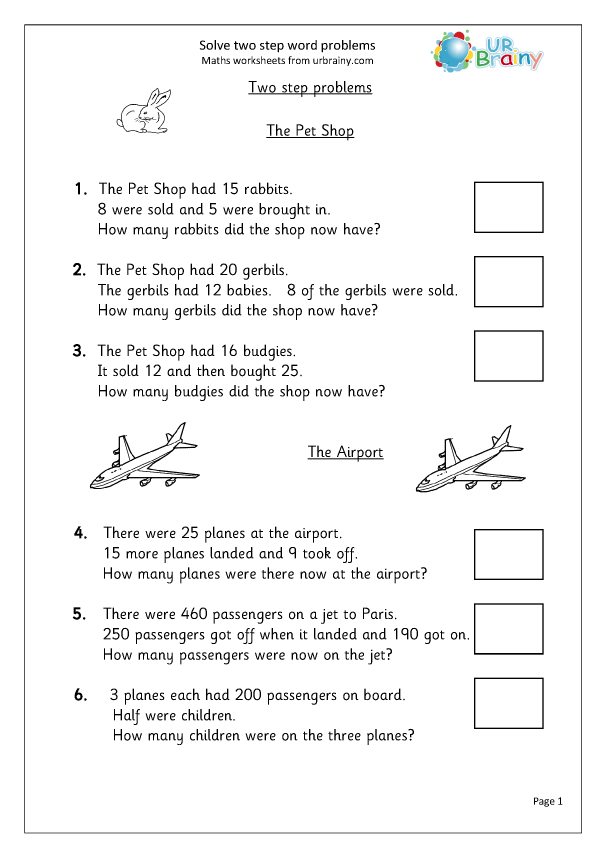
A typical worksheet designed for year 3 students will incorporate a variety of elements to facilitate effective learning. Core Exercises: These often involve addition, subtraction, multiplication, and division applied to everyday scenarios. Questions might require calculating the cost of items, sharing quantities equally, or determining elapsed time. Visual Aids: Many worksheets incorporate visual aids such as diagrams, charts, and illustrations to help children visualize the problem and understand the underlying concepts. These assist in breaking down complex situations into manageable parts. Interactive Elements: Some worksheets include interactive elements such as fill-in-the-blanks, multiple-choice questions, or drawing tasks to actively engage the learner. Word problems are often presented in simple, age-appropriate language, ensuring that children can focus on the mathematical aspects of the question, rather than struggling with complex vocabulary.
Tips and Complementary Resources
To maximize the effectiveness of mathematical challenges in year 3, consider the following strategies. Daily Practice Tips: Allocate a specific time each day for working through these questions. Consistency is key to solidifying understanding and building confidence. Encourage children to read each problem carefully, identifying the question being asked and the relevant information provided. Pairing with Other Resources: Supplement worksheet practice with hands-on activities, such as using manipulatives like blocks or counters to visualize the problems. Furthermore, online resources and educational games can provide an engaging and interactive way to reinforce mathematical concepts and enhance problem-solving skills. Parental or tutor support can also prove beneficial, providing guidance and encouragement as children work through challenging problems.
Conclusion
The integration of scenario-based math tasks into a year 3 curriculum provides a solid foundation for future mathematical success. These exercises not only reinforce core mathematical concepts, but also develop crucial problem-solving skills and logical reasoning abilities. By regularly engaging with these problems, children gain confidence in their mathematical abilities and learn to apply their knowledge in real-world contexts. Utilizing the tips and resources provided can ensure a positive and effective learning experience. Consider supplementing these activities with related materials such as math games and interactive online resources to further enhance learning. Embrace this method as an opportunity to cultivate a love of learning and build a strong mathematical foundation for future academic success.
Developmental Milestone & Activity Table
| Development Stage | Recommended Daily Duration | Primary Learning Objective |
|---|---|---|
| Preschool & Pre-K | 10 – 15 Minutes | Pencil grip development & basic pre-stroke lines |
| Kindergarten | 15 – 20 Minutes | Letter/number formation & spatial line awareness |
| Early Elementary (Grade 1–2) | 20 – 30 Minutes | Fluency, sentence construction & neatness |
Images References




Discover more printable learning activities by visiting our full Fun and Seasonal Math Worksheets archive for teachers, homeschoolers, and parents.