Learning mathematics often thrives on connection and relevance. When educational tools link abstract concepts to an individual’s personal world, understanding deepens significantly. This particular resource offers an innovative approach, transforming numerical exploration into a journey of self-discovery. By grounding mathematical exercises in personal data and experiences, it helps illuminate how numbers are intrinsically woven into everyday life, making learning more engaging and accessible for all. Explore more in our Math Worksheets collection.
💡 Educational Key Takeaways:
- Core Skill: Structured Math All About Me Worksheet focused on developing pencil grip, stroke control, and early literacy/math confidence.
- Target Scope: Suited for homeschoolers, preschool, kindergarten, and elementary learners.
- Best Recommendation: Practice 10–15 minutes daily with ergonomic writing tools to reinforce muscle memory without hand fatigue.
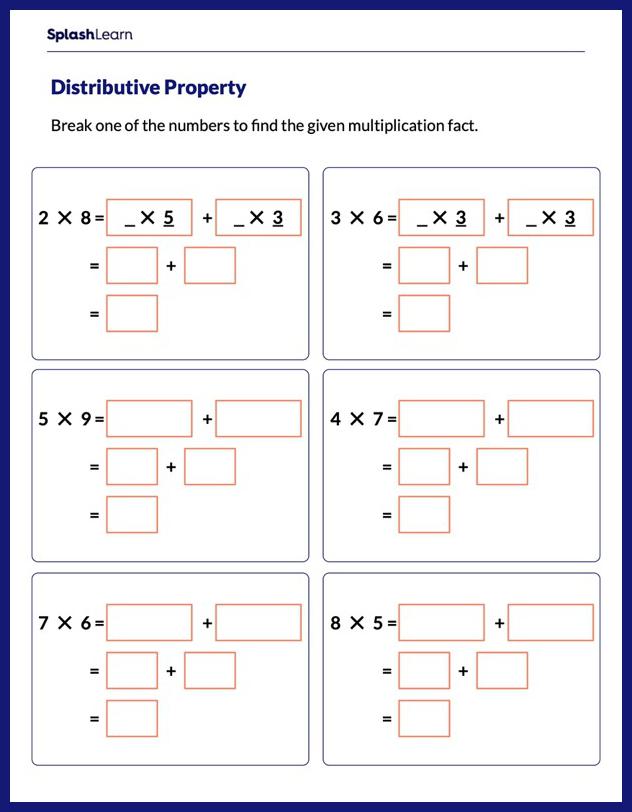
Utilizing this personalized math activity offers numerous benefits. It fosters a strong sense of ownership over the learning process, as the content directly relates to the student. This promotes critical thinking by requiring individuals to identify and categorize numerical facts about themselves, then apply mathematical operations to those figures. Furthermore, it encourages self-expression through numbers, allowing for a unique blend of personal narrative and quantitative analysis. The exercise also builds confidence by demonstrating that mathematical principles are not just found in textbooks but are tangible and relevant to one’s own existence, thereby reinforcing fundamental concepts in an enjoyable manner. For more related activities, check out our Distributive Property 3rd Grade Worksheets.
The structure of such an educational document typically involves a series of prompts that guide the individual to gather and process personal numerical data. These might include sections for recording age, height, number of family members, favorite numbers, or even calculating the total number of hours spent on a specific hobby. Activities often range from simple addition and subtraction to creating bar graphs or pie charts based on collected information, writing word problems inspired by personal routines, or calculating averages from a set of personal statistics. Each section is designed to be approachable, progressively building on different mathematical skills. Discover more free resources across our collection library.
To maximize the effectiveness of this reflective numerical exercise, a structured approach is recommended. Begin by carefully reading through all instructions to understand the scope of the tasks. Next, gather all necessary personal information accurately, perhaps with assistance from a guardian or peer if required. Work through each section systematically, focusing on one mathematical concept at a time. It is beneficial to double-check calculations and interpretations, ensuring precision in the numerical representations. Finally, take time to reflect on the completed work, considering what was learned about oneself and the various ways mathematics describes the personal world.
Expanding on the insights gained from this type of personalized activity can further enhance mathematical understanding. Consider creating additional sections that involve more complex calculations related to personal finances, travel plans, or even growth over time. Exploring how these personal numerical insights can be represented visually through different types of charts and diagrams can also be beneficial. For continued learning, seeking out similar themed mathematics sheets or project-based learning materials that integrate personal elements with academic subjects is highly recommended, as it reinforces the interdisciplinary nature of knowledge.
In conclusion, engaging with a resource that connects mathematics to personal experience offers a powerful pathway to deeper understanding and appreciation for the subject. It transforms potentially abstract concepts into meaningful, relatable challenges, fostering both numerical fluency and self-awareness. It is highly encouraged to explore and download similar educational documents to continue building foundational mathematical skills through personalized and enjoyable exploration.
Developmental Milestone & Activity Table
| Development Stage | Recommended Daily Duration | Primary Learning Objective |
|---|---|---|
| Preschool & Pre-K | 10 – 15 Minutes | Pencil grip development & basic pre-stroke lines |
| Kindergarten | 15 – 20 Minutes | Letter/number formation & spatial line awareness |
| Early Elementary (Grade 1–2) | 20 – 30 Minutes | Fluency, sentence construction & neatness |