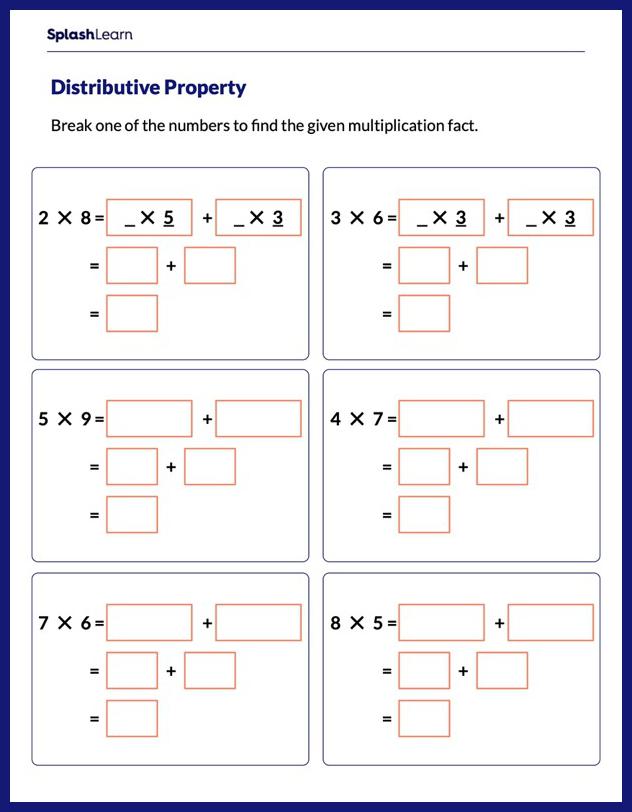
Developing a strong foundation in mathematics is crucial for academic success and practical problem-solving. Early algebraic concepts serve as the bedrock for all subsequent advanced mathematical studies. Consistent practice through structured exercises is paramount for solidifying understanding and building confidence in this vital subject area. Engaging with well-designed practice materials significantly enhances comprehension, allowing learners to master fundamental skills before progressing to more complex topics. These targeted learning tools provide the repetitive exposure necessary for deep internalization of concepts and procedures. Explore more in our Math Worksheets collection.
💡 Educational Key Takeaways:
- Core Skill: Structured Printable Pre Algebra Worksheets focused on developing pencil grip, stroke control, and early literacy/math confidence.
- Target Scope: Suited for homeschoolers, preschool, kindergarten, and elementary learners.
- Best Recommendation: Practice 10–15 minutes daily with ergonomic writing tools to reinforce muscle memory without hand fatigue.
Utilizing these foundational mathematical exercises offers numerous educational advantages. They facilitate the reinforcement of key concepts such as integers, fractions, decimals, and basic equations, ensuring each topic is thoroughly understood. Regular engagement supports the development of critical thinking skills as learners analyze problems and devise solutions. These resources also aid in identifying specific areas where a learner might struggle, allowing for focused remediation. Moreover, the systematic practice builds problem-solving proficiency and prepares individuals for more advanced mathematical challenges, fostering a sense of accomplishment and readiness for higher-level algebra. For more related activities, check out our Addition And Subtraction Worksheets To 10.
The structure of these learning aids typically encompasses a variety of problem types designed to cover the breadth of early algebraic concepts. Common topics include operations with rational numbers, simplifying algebraic expressions, solving linear equations and inequalities, understanding ratios and proportions, and working with percentages. Questions might range from multiple-choice selections and fill-in-the-blank exercises to multi-step problem-solving scenarios. Many include space for showing work, which is essential for understanding the problem-solving process, and may provide answer keys for immediate self-assessment, allowing for instant feedback on performance. Discover more free resources across our collection library.
To maximize the effectiveness of these educational sheets, a systematic approach is recommended. First, dedicate a specific time and quiet space for concentrated work, minimizing distractions. Begin by reviewing the relevant pre-algebraic concepts before attempting the problems. Work through each problem step-by-step, showing all calculations and thought processes; this approach helps in identifying errors and reinforces correct methods. After completing a set of problems, use the provided answer key (if available) to check solutions. For any incorrect answers, revisit the problem, identify the mistake, and re-solve it. Should difficulties persist, it is beneficial to consult textbooks or educational videos for clarification before attempting similar problems.
Further enhancing the learning experience with these practice materials can be achieved by integrating them with other educational resources. Supplementing the exercises with explanations from textbooks or online tutorials can provide alternative perspectives and deeper insights into challenging topics. Engaging in collaborative study with peers can also be highly beneficial, as discussing problems and solutions often clarifies understanding. Regular, short practice sessions are generally more effective than infrequent, long ones. Maintaining a positive attitude towards mathematics and viewing mistakes as learning opportunities will significantly contribute to sustained progress and confidence building. Explore different variations of these practice sheets to gain exposure to diverse problem sets.
Consistent engagement with well-structured mathematical exercises is a cornerstone of mastering early algebraic concepts. The benefits of such dedicated practice extend beyond immediate comprehension, fostering essential critical thinking and problem-solving skills vital for future academic and professional pursuits. Learners are encouraged to download and explore a wide array of these valuable educational tools to support their mathematical journey, ensuring a robust and confident command of foundational algebra.
Developmental Milestone & Activity Table
| Development Stage | Recommended Daily Duration | Primary Learning Objective |
|---|---|---|
| Preschool & Pre-K | 10 – 15 Minutes | Pencil grip development & basic pre-stroke lines |
| Kindergarten | 15 – 20 Minutes | Letter/number formation & spatial line awareness |
| Early Elementary (Grade 1–2) | 20 – 30 Minutes | Fluency, sentence construction & neatness |