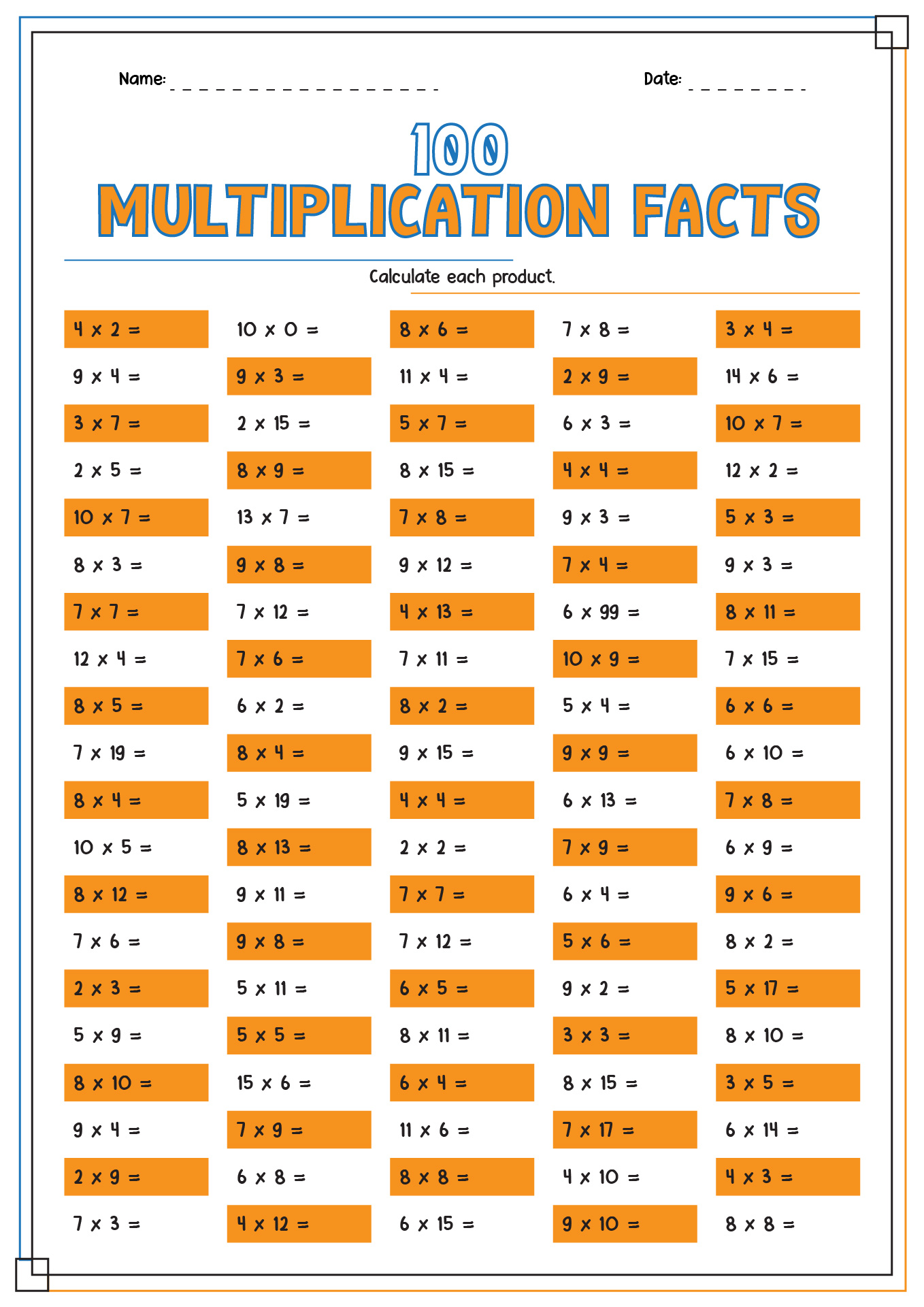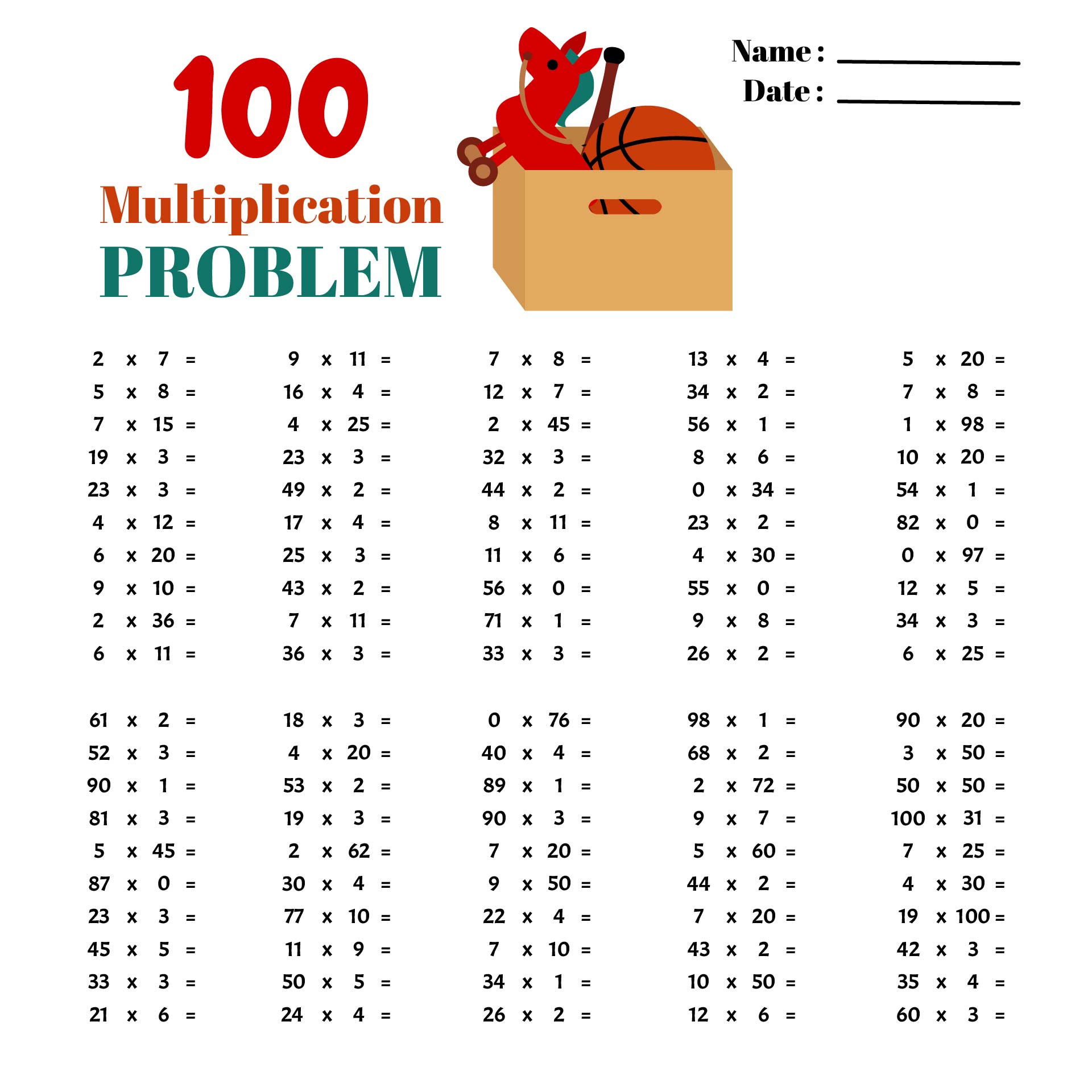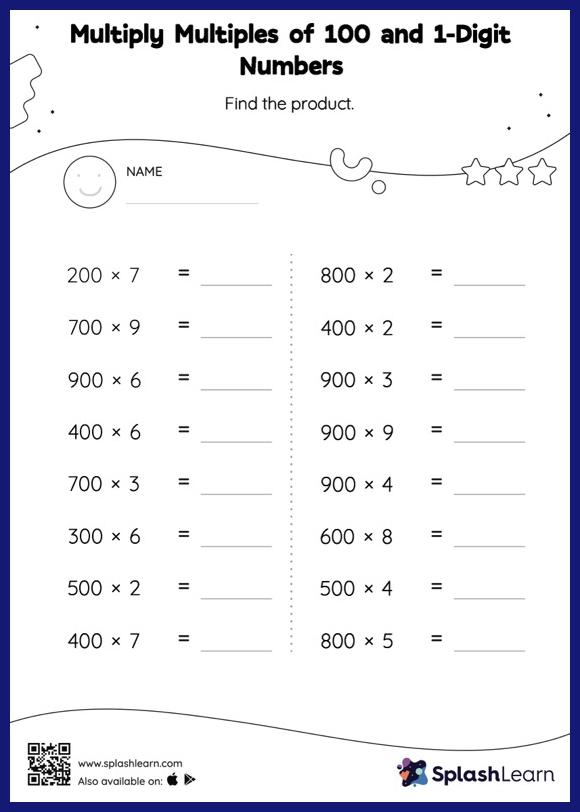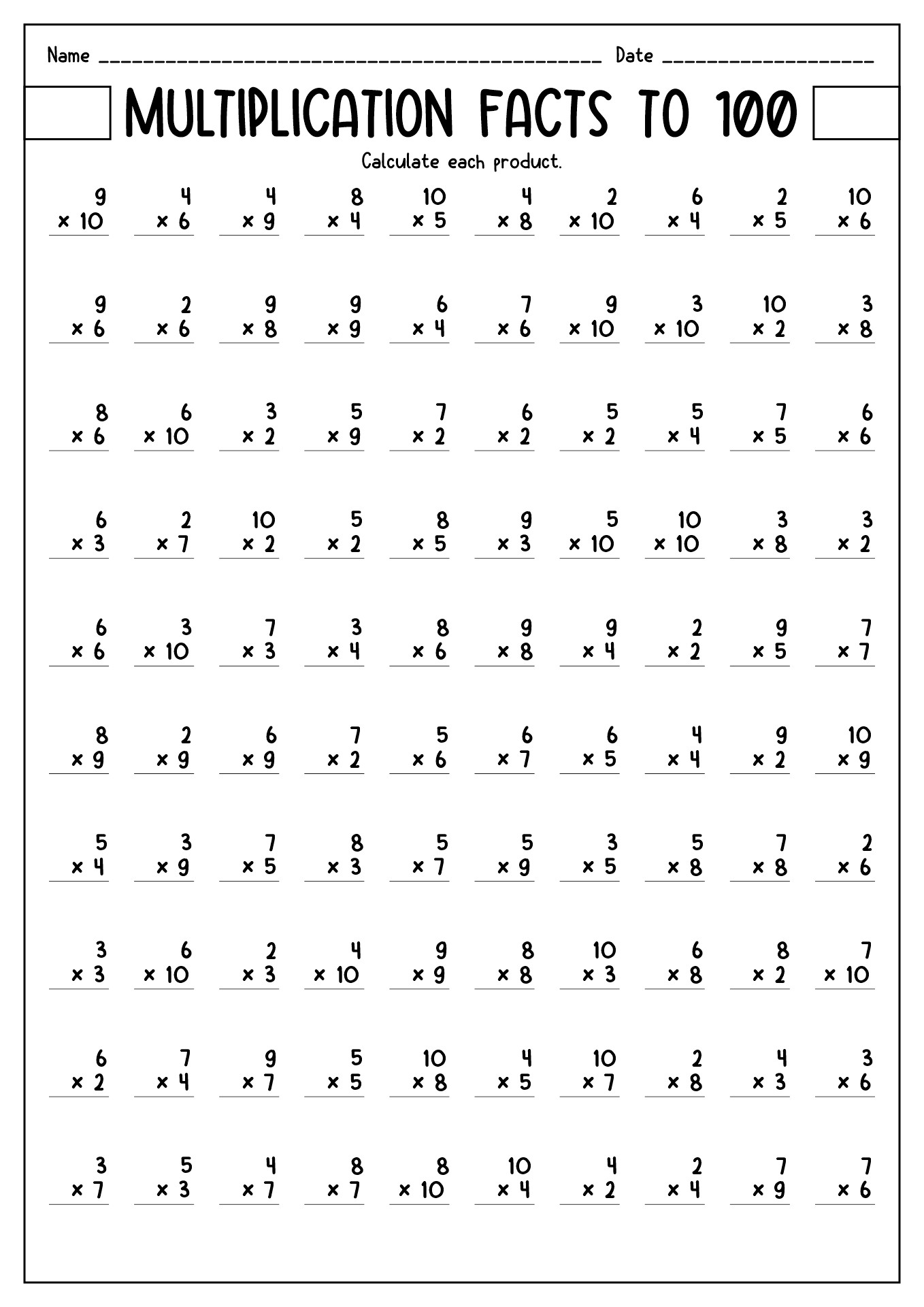
Developing proficiency in fundamental arithmetic operations is a cornerstone of mathematical understanding. Among these, multiplication stands out as a critical skill, serving as a building block for more complex mathematical concepts. Structured practice is indispensable for achieving mastery in this area. A resource featuring a hundred distinct multiplication problems offers an invaluable tool for learners to solidify their understanding, improve recall, and enhance computational speed and accuracy. Explore more in our Math Worksheets category.
💡 Educational Key Takeaways:
- Core Skill: Structured Multiplication Worksheets 100 focused on developing pencil grip, stroke control, and early literacy/math confidence.
- Target Scope: Suited for homeschoolers, preschool, kindergarten, and elementary learners.
- Best Recommendation: Practice 10–15 minutes daily with ergonomic writing tools to reinforce muscle memory without hand fatigue.
The primary benefit of engaging with such an extensive set of exercises lies in its ability to foster fluency. Regular exposure to numerous problems helps commit multiplication facts to memory, reducing the need for lengthy calculations and freeing up cognitive resources for higher-level problem-solving. It significantly improves mental arithmetic capabilities and develops a strong number sense. Furthermore, consistent practice builds confidence, transforming a potentially daunting subject into an approachable and even enjoyable challenge. This type of practice also aids in identifying specific areas where a learner might struggle, allowing for targeted review and focused effort. Related guide: Spring Math Worksheets For Kindergarten.
Typically, these comprehensive practice materials are structured to present one hundred distinct multiplication equations. Problems might range from basic single-digit multiplication facts to more challenging multi-digit scenarios, depending on the intended skill level. The layout is often clear and uncluttered, providing ample space for calculations or answers. Some versions may include grids for organizing work, while others might focus purely on the equations, encouraging mental computation or scratchpad use. The design ensures a thorough workout across a wide range of number combinations, ensuring comprehensive practice rather than repetitive engagement with the same few facts. Browse more guides on Cheap Worksheets.
To maximize the effectiveness of these detailed multiplication practice pages, a systematic approach is recommended. First, establish a consistent routine for practice, perhaps completing a set amount of problems daily. Second, consider implementing timed sessions to develop speed and efficiency; however, prioritize accuracy over speed initially. Third, encourage careful review of all answers, especially incorrect ones, to understand the errors rather than simply correcting them. This analytical approach reinforces learning. Finally, breaking the hundred problems into smaller, manageable chunks can prevent overwhelm and maintain motivation, gradually increasing the number of problems tackled in a single sitting as proficiency grows.
Beyond the direct engagement with these exercises, supplementing learning with additional resources can be highly beneficial. Utilizing flashcards for quick recall of specific multiplication facts, exploring online interactive games that make learning enjoyable, or applying multiplication to real-world scenarios through word problems can deepen understanding. Related practice sheets focusing on division, addition, or subtraction can also reinforce the interconnectedness of arithmetic operations. Exploring different types of hundred-problem sets, perhaps those focusing on specific number families or introducing different levels of difficulty, provides continued challenge and growth.
In conclusion, engaging with a robust collection of hundred multiplication problems provides a structured and effective pathway to achieving mastery in this fundamental mathematical skill. The benefits extend beyond mere computation, fostering confidence, critical thinking, and a solid foundation for future academic success. Learners are encouraged to utilize these valuable learning tools diligently, explore related resources, and celebrate each step of progress on their mathematical journey. Opportunities to download and explore similar comprehensive practice sheets abound, offering continuous support for skill development.
Developmental Milestone & Activity Table
| Development Stage | Recommended Daily Duration | Primary Learning Objective |
|---|---|---|
| Preschool & Pre-K | 10 – 15 Minutes | Pencil grip development & basic pre-stroke lines |
| Kindergarten | 15 – 20 Minutes | Letter/number formation & spatial line awareness |
| Early Elementary (Grade 1–2) | 20 – 30 Minutes | Fluency, sentence construction & neatness |
Images References