Introduction and Importance of Addition and Subtraction Problem Solving
Developing proficiency in arithmetic operations is foundational for mathematical understanding and critical thinking. Early exposure to and mastery of these concepts builds a solid base for more complex mathematical topics encountered later in education and in everyday life. Successfully navigating various situations, from managing personal finances to understanding data in reports, depends on this fundamental skill. Encouraging learners to engage with activities that specifically target arithmetic calculations fosters not only procedural fluency but also the ability to analyze and solve real-world problems effectively. This capacity empowers them to approach challenges with confidence and to make informed decisions, highlighting the long-term significance of these initial learning experiences. A strong grasp of basic calculations provides a powerful tool for problem-solving across diverse contexts, ultimately contributing to both academic achievement and practical competence.
💡 Educational Key Takeaways:
- Core Skill: Structured Addition And Subtraction Problem Solving focused on developing pencil grip, stroke control, and early literacy/math confidence.
- Target Scope: Suited for homeschoolers, preschool, kindergarten, and elementary learners.
- Best Recommendation: Practice 10–15 minutes daily with ergonomic writing tools to reinforce muscle memory without hand fatigue.
Structure and How It Works
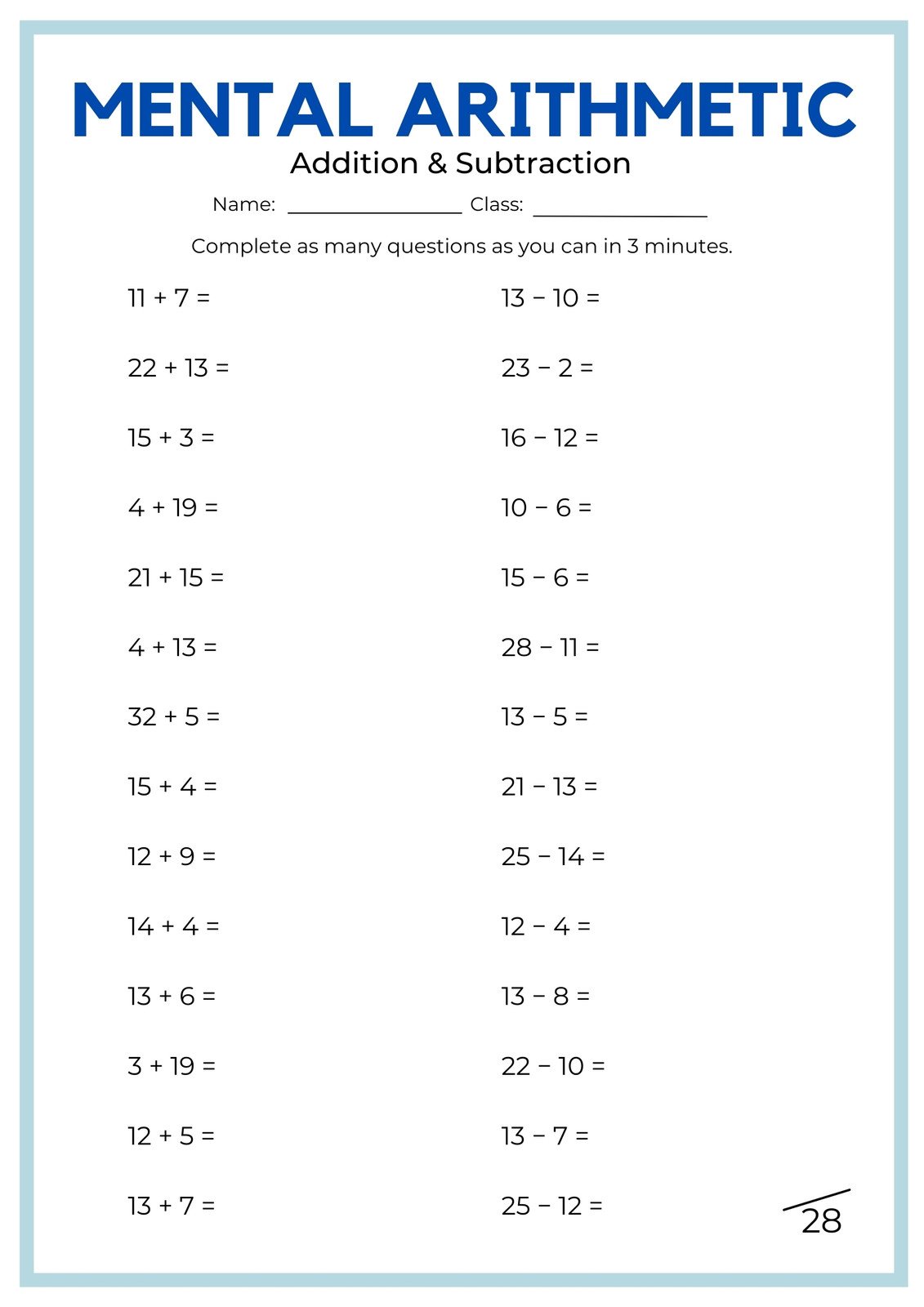
A well-designed worksheet facilitates targeted practice and understanding. It typically incorporates a variety of elements to engage learners and reinforce key concepts. Core Exercises: This section often features straightforward computation problems designed to build foundational fluency with numbers. These can include simple addition and subtraction equations, moving towards more complex operations with larger numbers and multiple steps. Word Problems: These activities translate mathematical concepts into realistic scenarios, requiring learners to identify the relevant information and apply the correct operation to find a solution. Interactive Elements: Some worksheets incorporate visual aids like number lines or diagrams to support understanding. Others may include puzzles or games to make learning more engaging. Progressing through these diverse exercises allows learners to reinforce their knowledge and apply the skills acquired to new situations, fostering deeper conceptual understanding. The inclusion of answer keys further aids in self-assessment and independent learning.
Tips and Complementary Resources
Maximizing the benefits requires a strategic approach and consistent engagement. Daily Practice Tips: Dedicate a short, regular time slot for focused practice. Breaking the task into smaller, manageable segments makes it less daunting and promotes retention. Encourage learners to show their work and to explain their reasoning, fostering a deeper understanding of the underlying concepts. Pairing with Other Resources: Supplement worksheet practice with real-world activities, such as counting money, measuring ingredients while cooking, or calculating distances. Utilize online resources like interactive games and tutorials to provide varied learning experiences. Exploring diverse methods and materials helps solidify understanding and keeps learning stimulating. Remember that consistent effort, coupled with thoughtful application of different learning tools, ultimately leads to greater competence and confidence.
Conclusion
The ability to confidently and accurately perform calculations is an essential skill, applicable in countless aspects of life. Engaging with specifically designed materials offers a structured and effective way to develop and refine this skill. The carefully sequenced exercises, coupled with opportunities to apply knowledge in contextual problems, foster both computational fluency and problem-solving capabilities. By consistently utilizing such materials and incorporating them into regular practice routines, learners gain a strong foundation that supports future mathematical endeavors and enables them to approach everyday challenges with greater ease and assurance. Furthermore, the sense of accomplishment derived from successfully completing these tasks builds confidence and motivates continued learning. Resources focusing on multiplication and division can serve as a natural progression for further skill development.
Developmental Milestone & Activity Table
| Development Stage | Recommended Daily Duration | Primary Learning Objective |
|---|---|---|
| Preschool & Pre-K | 10 – 15 Minutes | Pencil grip development & basic pre-stroke lines |
| Kindergarten | 15 – 20 Minutes | Letter/number formation & spatial line awareness |
| Early Elementary (Grade 1–2) | 20 – 30 Minutes | Fluency, sentence construction & neatness |
Images References :
Discover more printable learning activities by visiting our full Early Math Skills Worksheets archive for teachers, homeschoolers, and parents.