Introduction and Importance of Year 4 Maths Word Problems
Mathematical literacy is a cornerstone of a child’s education, and proficiency in solving word problems is a critical component of that literacy. For year 4 students, these exercises offer a bridge between abstract mathematical concepts and real-world applications. Successfully tackling these challenges fosters critical thinking, problem-solving skills, and the ability to translate written scenarios into mathematical equations. Early exposure to, and mastery of, these skills provides a solid foundation for future mathematical studies and equips young learners with valuable tools applicable across various academic disciplines and everyday situations. It allows students to see the relevance of mathematics beyond the textbook, encouraging a deeper understanding and appreciation for the subject. Cultivating this ability at a young age instills confidence and promotes a proactive approach to problem-solving in all aspects of life, empowering them to become analytical and resourceful individuals. Mastering these problems also aids in developing logical reasoning, attention to detail, and the ability to extract relevant information from complex texts, skills vital for academic success.
💡 Educational Key Takeaways:
- Core Skill: Structured Year 4 Maths Word Problems focused on developing pencil grip, stroke control, and early literacy/math confidence.
- Target Scope: Suited for homeschoolers, preschool, kindergarten, and elementary learners.
- Best Recommendation: Practice 10–15 minutes daily with ergonomic writing tools to reinforce muscle memory without hand fatigue.
Structure and How It Works
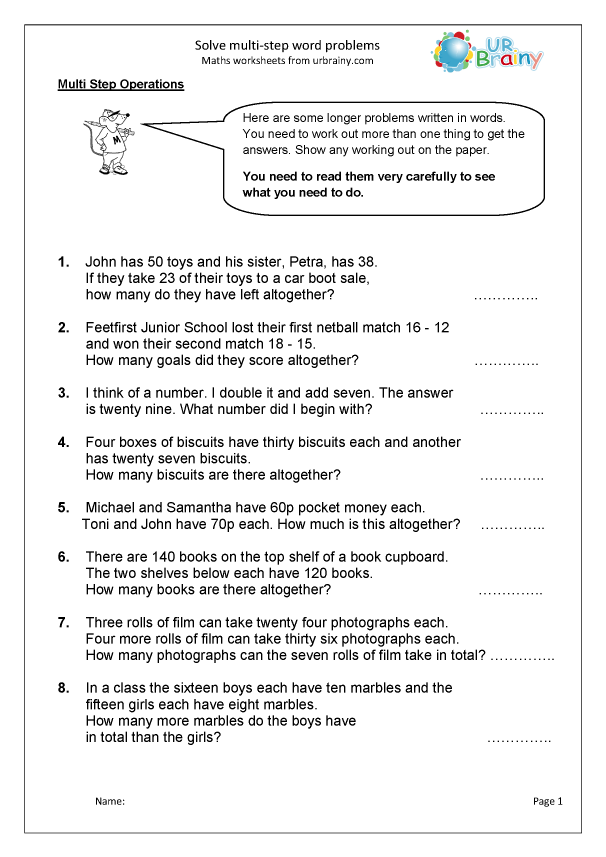
The typical worksheet designed to enhance mathematical skills in young learners often presents a structured approach to problem-solving. Core Exercises: The initial section typically consists of a series of word problems designed to reinforce fundamental mathematical operations such as addition, subtraction, multiplication, and division, applied within practical contexts. These problems vary in complexity, progressively challenging students to apply their knowledge in increasingly intricate scenarios. The format usually involves a brief description of a situation requiring a mathematical solution, followed by a question or instruction. Interactive Elements: Some worksheets may include visual aids, such as diagrams or illustrations, to enhance understanding and engagement. An answer key is typically provided, allowing for self-assessment and immediate feedback. Furthermore, opportunities for showing the working steps are presented, encouraging the development of a systematic approach to problem-solving. To foster an inclusive environment, the worksheet can include varied levels of challenge. Furthermore, some problems may integrate concepts from other areas of the curriculum, such as science or social studies, to provide a cross-curricular learning experience.
Tips and Complementary Resources
Effective utilization of these resources involves a strategic approach to maximize learning outcomes. Daily Practice Tips: Consistent, short practice sessions are more effective than infrequent, lengthy ones. Dedicate a specific time each day to work through a few problems, reinforcing concepts regularly. Encourage students to read each problem carefully, identify key information, and plan their solution before attempting to calculate. Working through examples step-by-step can enhance comprehension, and encouraging children to explain their reasoning strengthens understanding. Pairing with Other Resources: Supplement these worksheets with interactive online games and tutorials to provide a varied learning experience. Manipulatives, such as counters or blocks, can be helpful for visualizing problems and understanding mathematical concepts concretely. Consulting textbooks and other educational materials provides a broader context and deeper understanding of the underlying principles. Seek support from teachers or tutors for clarification on challenging topics or concepts. Remember that making mistakes is a natural part of the learning process, and each error presents an opportunity for growth and development.
Conclusion
In summary, targeted at young learners offers a valuable tool for developing mathematical proficiency and problem-solving abilities. By providing opportunities to apply mathematical concepts in real-world scenarios, these resources foster critical thinking, logical reasoning, and the ability to translate written information into mathematical equations. Consistent practice, coupled with a strategic approach to learning, can lead to significant improvements in mathematical understanding and confidence. Remember that the goal is not merely to arrive at the correct answer but to develop a deep understanding of the underlying concepts and the ability to apply them effectively. Supplementing this with other educational resources can broaden their learning horizon and create a more engaging and comprehensive learning experience. Encouraging a growth mindset and celebrating effort and progress, not just results, fosters a positive attitude towards learning and cultivates a lifelong appreciation for the power of mathematics. Consider exploring related materials such as geometry exercises, fraction worksheets, or even age-appropriate coding activities to continue their intellectual journey.
Developmental Milestone & Activity Table
| Development Stage | Recommended Daily Duration | Primary Learning Objective |
|---|---|---|
| Preschool & Pre-K | 10 – 15 Minutes | Pencil grip development & basic pre-stroke lines |
| Kindergarten | 15 – 20 Minutes | Letter/number formation & spatial line awareness |
| Early Elementary (Grade 1–2) | 20 – 30 Minutes | Fluency, sentence construction & neatness |
Images References




Discover more printable learning activities by visiting our full Fun and Seasonal Math Worksheets archive for teachers, homeschoolers, and parents.