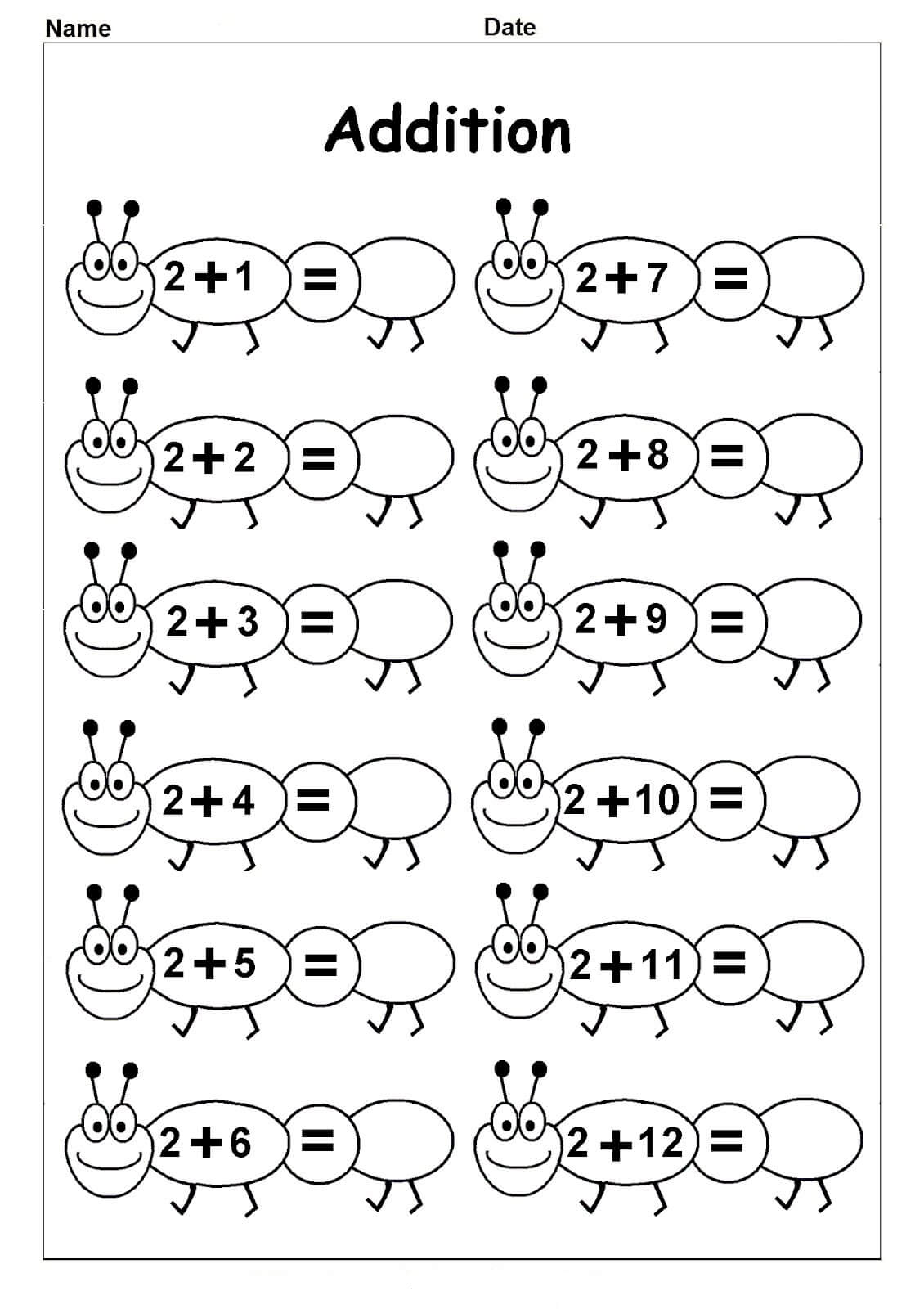
Grasping fundamental mathematical concepts is paramount for academic progression. Among the foundational tools in early mathematics education, the number line stands out as a critical visual aid. Engaging with practice materials that challenge learners to identify absent numerals on such a line significantly enhances numerical understanding. This particular educational resource offers a structured approach to solidify number sense, sequence recognition, and the underlying order of numbers, paving the way for more complex mathematical reasoning. Explore more in our Math Worksheets category.
💡 Educational Key Takeaways:
- Core Skill: Structured Missing Numbers On A Number Line Worksheet focused on developing pencil grip, stroke control, and early literacy/math confidence.
- Target Scope: Suited for homeschoolers, preschool, kindergarten, and elementary learners.
- Best Recommendation: Practice 10–15 minutes daily with ergonomic writing tools to reinforce muscle memory without hand fatigue.
Utilizing this type of practice sheet yields numerous educational advantages. It actively promotes the development of strong number sense by requiring learners to conceptualize the relative position and magnitude of numbers. The sequential nature of the exercises strengthens counting skills, both forwards and backwards, and fosters an intuitive understanding of numerical patterns. Furthermore, the visual problem-solving inherent in these tasks stimulates critical thinking and builds confidence in approaching mathematical challenges. It serves as an excellent reinforcement for classroom learning, translating abstract concepts into concrete, solvable problems. Related guide: Math Games Worksheets.
Typically, these learning tools feature a series of number lines, each presenting a sequence of numbers with strategic gaps. The complexity can vary, beginning with simple whole number sequences within a small range (e.g., 0-10 or 0-20) and progressing to larger numbers, negative integers, or even introducing fractions and decimals for more advanced learners. Some lines might have missing numbers at the beginning, others in the middle, and some at the end, ensuring a comprehensive challenge. The visual layout is designed to be clear and uncluttered, allowing focus on the numerical task at hand. Browse more guides on Cheap Worksheets.
To maximize the learning experience derived from these number line exercises, a structured approach is beneficial. First, an initial review of basic counting principles and number order is advisable to ensure a solid foundation. Next, approaching the simpler sequences first allows for building confidence before tackling more complex problems. A systematic method involves examining the given numbers on each line to determine the counting interval or pattern (e.g., counting by ones, twos, tens). Once the pattern is identified, the missing values can be logically deduced by applying that sequence. Verification of each completed sequence by reading the full line aloud can help reinforce correct numbering. If difficulties arise, using physical manipulatives like counters or a ruler can provide tactile support for understanding progression.
For continued growth in numerical proficiency, regular engagement with such materials is highly recommended. Exploring variations of these tasks, such as those that involve skip counting or identifying numbers before and after a given point, can further expand understanding. Connecting the concept of number lines to real-world scenarios, like measuring distances or tracking temperatures, can make the learning more relatable and practical. Educational platforms often provide interactive versions of these exercises, offering immediate feedback and dynamic challenges. Seeking out additional resources that focus on number sequencing and estimation will complement the skills developed through these specific practice sheets.
The mastery gained from successfully completing these numerical line challenges is a vital step in a learner’s mathematical journey. It establishes a robust understanding of number relationships and builds essential problem-solving capabilities. Encouragement is extended to thoroughly explore this fundamental educational resource and to seek out related materials that continue to foster a deeper appreciation for the structured world of numbers.
Developmental Milestone & Activity Table
| Development Stage | Recommended Daily Duration | Primary Learning Objective |
|---|---|---|
| Preschool & Pre-K | 10 – 15 Minutes | Pencil grip development & basic pre-stroke lines |
| Kindergarten | 15 – 20 Minutes | Letter/number formation & spatial line awareness |
| Early Elementary (Grade 1–2) | 20 – 30 Minutes | Fluency, sentence construction & neatness |