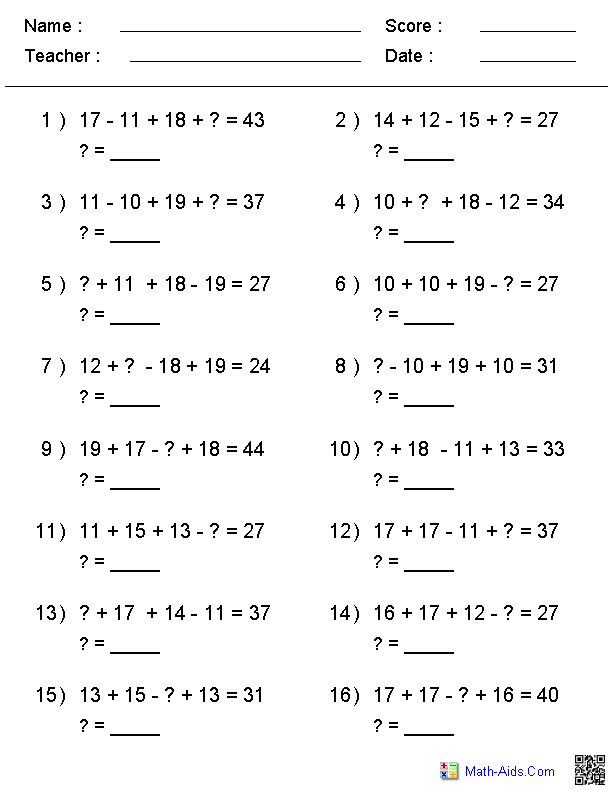
The journey through secondary education presents numerous academic challenges and opportunities for growth. To navigate this period successfully, effective learning strategies and tools are paramount. Among the most fundamental and widely utilized resources are structured learning activities designed for this academic level. These educational instruments serve as vital complements to classroom instruction, reinforcing key concepts, solidifying understanding, and providing invaluable practice in various subject areas. Their consistent application helps bridge potential knowledge gaps, strengthen foundational skills, and systematically prepare learners for upcoming assessments, fostering a deeper, more robust grasp of the curriculum. Explore more in our Math Worksheets category.
💡 Educational Key Takeaways:
- Core Skill: Structured High School Worksheets focused on developing pencil grip, stroke control, and early literacy/math confidence.
- Target Scope: Suited for homeschoolers, preschool, kindergarten, and elementary learners.
- Best Recommendation: Practice 10–15 minutes daily with ergonomic writing tools to reinforce muscle memory without hand fatigue.
Engaging with these targeted practice materials offers a multitude of academic advantages. Foremost among them is the reinforcement of recently taught topics, ensuring that theoretical knowledge translates into practical application. They are instrumental in developing problem-solving abilities, encouraging critical thinking, and promoting analytical skills as learners grapple with diverse question formats and scenarios. Furthermore, consistent interaction with these structured exercises cultivates independent study habits, a crucial skill for lifelong learning. They also provide a clear mechanism for learners to self-assess their comprehension, pinpointing areas that require further attention and allowing for focused review, thereby optimizing preparation for examinations and improving overall academic performance. Related guide: Expanded Form Math Worksheets.
The composition of these educational aids varies significantly across subjects and learning objectives, yet generally adheres to a clear, organized structure. Typically, they feature a range of question types, including multiple-choice, fill-in-the-blank, true/false, short answer, and extended response prompts. Many also incorporate problem-solving tasks, diagram labeling, graphic organizers, or concept mapping activities to cater to different learning styles and subject demands. Each section is meticulously crafted to target specific learning outcomes, breaking down complex topics into manageable segments and guiding learners through a progressive understanding of the material. The layout is often clean and intuitive, facilitating ease of use and focused engagement. Browse more guides on Cheap Worksheets.
To maximize the educational impact of these practice resources, a systematic approach is highly recommended. Initially, it is beneficial to thoroughly read all instructions and question prompts to ensure a clear understanding of the task requirements. Learners should then attempt to complete the activities independently, drawing upon their current knowledge and classroom notes without immediate recourse to external help. If challenges arise, consulting textbooks, class notes, or reliable online resources can provide necessary guidance. Upon completion, a critical step involves reviewing answers and, crucially, understanding any errors made. This process of identifying and correcting mistakes is integral to the learning cycle, cementing correct information and clarifying misconceptions. Finally, utilizing these exercises as a regular review tool before tests can significantly enhance recall and confidence.
Beyond the direct engagement with these learning documents, several complementary strategies can further enhance academic progress. Establishing a consistent study schedule that incorporates regular practice sessions helps build routine and discipline. Collaborating with peers on challenging sections, where permitted, can offer new perspectives and deepen understanding through discussion. Leveraging supplementary online tutorials, educational videos, or interactive simulations can provide alternative explanations and visual aids. Seeking feedback from educators on completed work is invaluable for gaining personalized insights and constructive criticism. Exploring additional practice sets or problem banks related to the current topic can also provide broader exposure and reinforce diverse applications of learned concepts.
In conclusion, the strategic use of tailored educational activities is a cornerstone of effective secondary education. These resources provide a structured pathway for concept mastery, skill development, and robust preparation for academic challenges. Their consistent and thoughtful application empowers learners to take an active role in their educational journey, fostering both competence and confidence. Engaging with these diverse learning tools is an essential practice for cultivating a deep and lasting understanding of academic subjects. Exploring the wide array of available practice materials and integrating them into a regular study routine is highly encouraged to unlock full academic potential and achieve sustained success.
Developmental Milestone & Activity Table
| Development Stage | Recommended Daily Duration | Primary Learning Objective |
|---|---|---|
| Preschool & Pre-K | 10 – 15 Minutes | Pencil grip development & basic pre-stroke lines |
| Kindergarten | 15 – 20 Minutes | Letter/number formation & spatial line awareness |
| Early Elementary (Grade 1–2) | 20 – 30 Minutes | Fluency, sentence construction & neatness |