Introduction and Importance
The integration of mathematical problem-solving with creative activities like coloring provides a multifaceted approach to learning. This method proves beneficial for reinforcing basic arithmetic skills such as addition, subtraction, multiplication, and division, while simultaneously engaging the learner’s artistic side. By associating numerical solutions with specific colors, it transforms what can often be perceived as a dry subject into an engaging and visually stimulating exercise. This type of activity is particularly effective for visual learners who benefit from seeing connections between different concepts. Whether employed in a classroom setting, utilized as part of a homeschooling curriculum, or enjoyed as a self-directed study aid, this type of worksheet can significantly enhance retention and comprehension. This blended learning tool can boost confidence and reduce math anxiety by presenting problems in an accessible and enjoyable format, and encourage students to see math as less intimidating and more approachable. The immediate feedback provided by the coloring process reinforces correct answers, leading to a more positive learning experience and a deeper understanding of fundamental mathematical principles.
💡 Activity Key Takeaways:
- Core Focus: Printable Math By Numbers Color Worksheet designed for creative expression and fine-motor coordination.
- Target Scope: Ideal for toddlers, preschool, kindergarten, and classroom art activities.
- Best Recommendation: Use standard heavy printer paper (24–28 lb) or cardstock for vibrant results with crayons, colored pencils, or washable markers.
Structure and How It Works
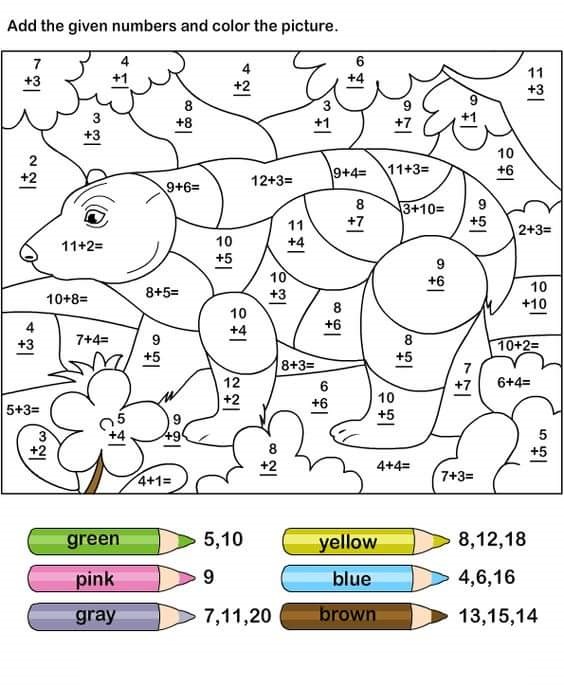
The typical layout presents a series of mathematical problems alongside a corresponding image, often featuring numbered sections. Each number corresponds to a solution derived from the provided equations. Once an equation is solved, the student identifies the corresponding number on the image and colors that section with the color assigned to that number. Core Exercises: The exercises commonly include arithmetic problems targeted at a specific skill level, ensuring that learners practice and reinforce their knowledge of basic operations. The complexity of the equations can be adjusted to suit various grade levels, from simple addition and subtraction for younger students to more complex multiplication, division, or even introductory algebra for older learners. Interactive Elements: Beyond the basic arithmetic problems, some may also incorporate elements like word problems or geometric shapes, adding another layer of complexity and engaging different aspects of mathematical thinking. This holistic approach helps to cement understanding and makes learning a more dynamic process, engaging both logical and creative parts of the brain, resulting in a more comprehensive and enjoyable educational activity. The visual component also allows for easy self-assessment, as errors in calculation immediately become apparent through incorrect color placements. Related guide: Thanksgiving Math Coloring Worksheets.
Tips and Complementary Resources
Maximizing the benefits involves integrating it purposefully into a broader learning strategy. Daily Practice Tips: Regular, short sessions are often more effective than infrequent, long ones. Allocating just 15-20 minutes each day to complete a page can help reinforce concepts and build confidence. It is important to ensure a conducive learning environment, free from distractions, so that the learner can focus on both the mathematical calculations and the artistic aspects of the activity. Encouragement and positive reinforcement are crucial; celebrating successes and viewing mistakes as learning opportunities can help cultivate a growth mindset. Pairing with Other Resources: These pages can be effectively paired with other learning materials, such as textbooks, online tutorials, or interactive math games. Supplementing these worksheets with real-world examples can further enhance understanding and show the practical application of mathematical concepts. For example, using measurement activities alongside a worksheet that involves fractions can help students better grasp the relationship between abstract concepts and tangible objects. This combination of methods can create a richer, more comprehensive learning experience that caters to different learning styles and abilities.
Conclusion
This interactive learning tool effectively combines mathematical practice with artistic expression, offering a unique and engaging way to reinforce fundamental skills. By transforming typically dry arithmetic problems into a colorful and visually stimulating activity, it helps to make learning more enjoyable and accessible, particularly for visual learners. The benefits extend beyond mere skill reinforcement; it also fosters creativity, improves focus, and builds confidence in mathematical abilities. Educators and parents are encouraged to incorporate them into their teaching or learning strategies, as it provides a valuable tool for making math both fun and educational. By using this type of activity, learners can develop a stronger understanding of mathematical concepts, enhance their problem-solving skills, and cultivate a positive attitude towards learning. Explore options of similar coloring worksheets with different themes or skill levels to keep the learning experience fresh and engaging. Encouraging consistent use and integration with other educational resources will ensure maximum benefits for both learners and educators alike.
Key Specifications & Age-Group Overview
| Age / Grade Group | Target Skill Focus | Recommended Medium |
|---|---|---|
| Toddlers (Ages 2–4) | Hand-eye coordination & broad motor grasp | Jumbo crayons & washable finger paints |
| Early Elementary (Ages 5–7) | Line boundaries & fine pencil control | Standard colored pencils & fine-tip markers |
| Intermediate (Ages 8+) | Color blending, shading & artistic patience | Watercolor pencils, gel pens & dual-brush markers |
Images References :
Discover more printable learning activities by visiting our full Shape and Color Worksheets archive for teachers, homeschoolers, and parents.