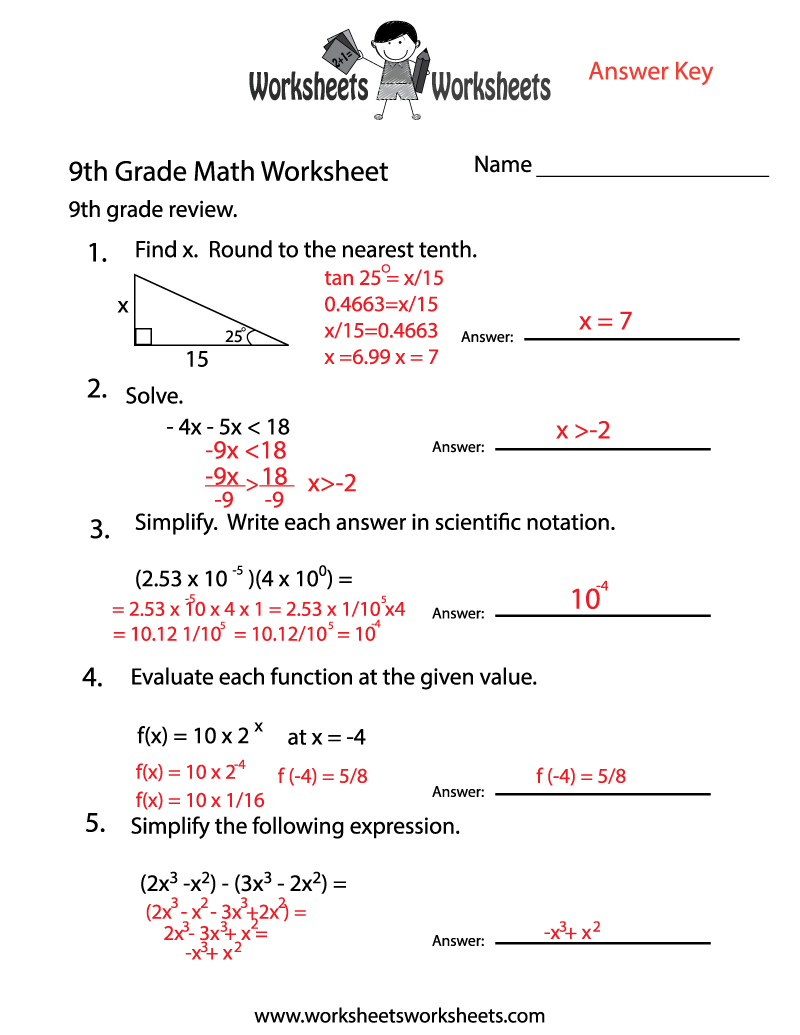
Mastering fundamental mathematical operations is a cornerstone of academic success and practical life skills. While rote calculation is important, the true test of understanding lies in applying these operations to real-world contexts. Educational tools specifically designed for this purpose are instrumental in bridging the gap between abstract numbers and tangible situations. They provide a structured environment for learners to develop critical thinking, analytical skills, and a deeper conceptual grasp of mathematical principles by presenting scenarios that require numerical solutions. Explore more in our Math Worksheets collection.
💡 Educational Key Takeaways:
- Core Skill: Structured Addition Problem Solving Worksheets focused on developing pencil grip, stroke control, and early literacy/math confidence.
- Target Scope: Suited for homeschoolers, preschool, kindergarten, and elementary learners.
- Best Recommendation: Practice 10–15 minutes daily with ergonomic writing tools to reinforce muscle memory without hand fatigue.
Engaging with structured problem-solving exercises offers a multitude of benefits for learners at various stages. These resources are pivotal in fostering a deeper conceptual understanding of how addition functions within different contexts, moving beyond simple sums. They enhance critical thinking by requiring learners to decipher information, identify relevant data, and formulate a strategic approach to problem-solving. Furthermore, these practice materials significantly improve logical reasoning as individuals learn to translate narrative problems into mathematical equations. The process builds confidence in tackling more complex mathematical challenges and equips learners with essential skills for navigating everyday numerical situations, from managing budgets to understanding quantities. For more related activities, check out our Second Grade Math Worksheet.
The typical structure of these educational materials often includes a diverse range of word problems, varying in complexity to accommodate different learning levels. Each problem presents a unique scenario that necessitates the application of addition. Worksheets frequently provide dedicated space for learners to show their work, which might include identifying key pieces of information, sketching diagrams, or writing out the mathematical equation before arriving at a solution. Many resources incorporate engaging illustrations or relatable real-world contexts to make the problems more accessible and interesting. Some advanced sheets may even feature multi-step problems or those requiring a preliminary understanding of units or simple conversions, adding layers of challenge and depth. Discover more free resources across our collection library.
To maximize the effectiveness of these problem-solving exercises, a systematic approach is highly recommended. First, it is crucial to read each problem carefully, perhaps multiple times, to ensure a complete understanding of the scenario and the question being asked. Next, learners should identify the key information, specifically the numbers and any operational keywords that indicate addition. The third step involves formulating an appropriate mathematical equation that accurately represents the problem. Subsequently, the addition operation should be performed systematically. A critical final step is to check the answer, evaluating whether the solution makes logical sense within the context of the original problem. Consistently showing all work throughout this process not only reinforces understanding but also aids in identifying and correcting any errors.
Beyond the direct engagement with these structured materials, several additional practices can enhance the learning experience. Regular, consistent practice is vital for solidifying understanding and building fluency. Learners might benefit from discussing problems with peers or educators, which can offer new perspectives and clarification. If any difficulties arise with basic addition facts, a brief review of those foundational skills before tackling word problems can prove immensely beneficial. Exploring a variety of related educational resources, such as those focusing on subtraction word problems or mixed operations, can further broaden mathematical proficiency. Cultivating a growth mindset, where challenges are viewed as opportunities for learning, is also incredibly empowering for long-term academic success.
Ultimately, engaging with educational materials focused on mathematical problem-solving provides an invaluable foundation for analytical thought and practical application. These resources are not merely about finding correct answers; they are about developing a robust problem-solving methodology that transcends mathematics into other academic disciplines and real-life situations. Continuous interaction with these types of structured practice sheets builds essential skills, fosters confidence, and prepares individuals for more advanced mathematical concepts. Learners are strongly encouraged to explore the wide range of available problem-solving resources to strengthen their mathematical proficiency and unlock their full potential.
Developmental Milestone & Activity Table
| Development Stage | Recommended Daily Duration | Primary Learning Objective |
|---|---|---|
| Preschool & Pre-K | 10 – 15 Minutes | Pencil grip development & basic pre-stroke lines |
| Kindergarten | 15 – 20 Minutes | Letter/number formation & spatial line awareness |
| Early Elementary (Grade 1–2) | 20 – 30 Minutes | Fluency, sentence construction & neatness |