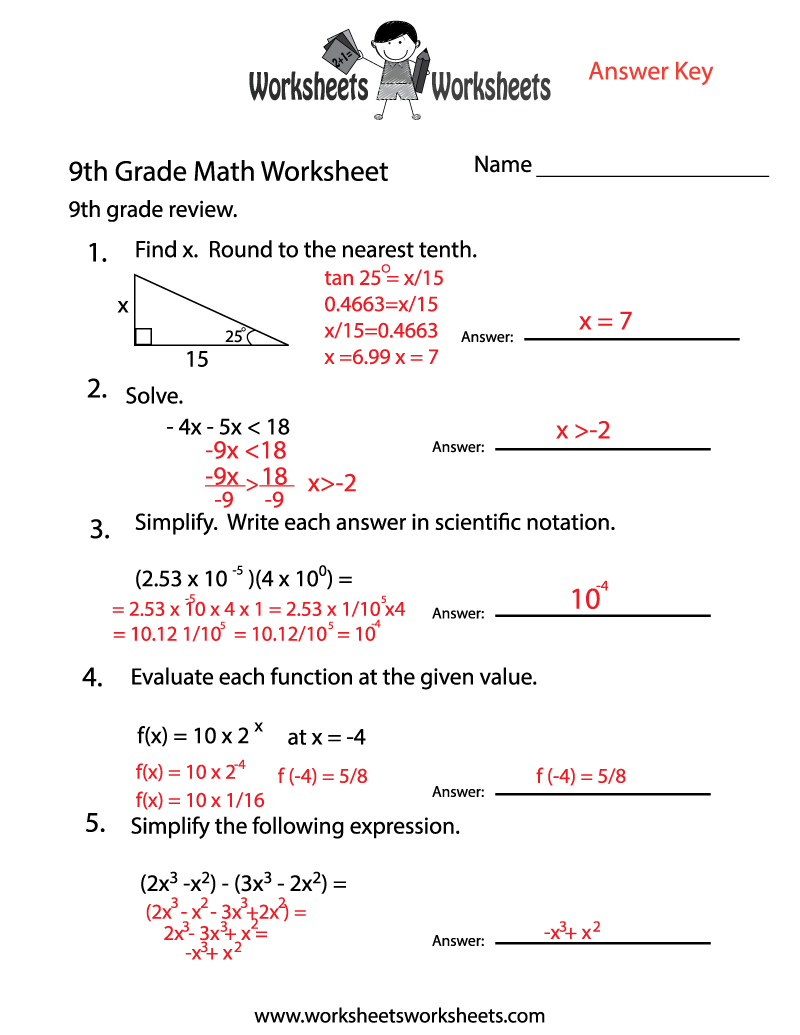
Early mathematical understanding forms a cornerstone for future academic success and critical thinking development. Introducing structured activities for young children is vital for cultivating foundational numeracy skills and fostering a positive relationship with numbers from an early age. Carefully designed learning tools provide an accessible and engaging platform for children to explore basic concepts, building confidence and cognitive abilities essential for navigating the world around them. Explore more in our Math Worksheets collection.
💡 Educational Key Takeaways:
- Core Skill: Structured Mathematics Worksheet For Preschool focused on developing pencil grip, stroke control, and early literacy/math confidence.
- Target Scope: Suited for homeschoolers, preschool, kindergarten, and elementary learners.
- Best Recommendation: Practice 10–15 minutes daily with ergonomic writing tools to reinforce muscle memory without hand fatigue.
Engaging with these early learning resources offers numerous benefits. They support the development of crucial skills such as number recognition, counting, and one-to-one correspondence. Through various exercises, children enhance their problem-solving capabilities by attempting simple quantitative tasks. The visual and interactive nature of these materials also aids in improving fine motor skills through tracing and matching, while simultaneously boosting cognitive development by encouraging pattern identification and shape differentiation. These activities lay the groundwork for more complex mathematical reasoning later on. For more related activities, check out our In Out Boxes Math.
Typically, these educational materials feature a straightforward and visually appealing structure to capture young learners’ attention. Content often includes exercises for tracing numbers, counting objects within a set, identifying basic shapes (circles, squares, triangles), and simple comparison tasks like “bigger/smaller” or “more/less.” Activities might also involve completing patterns or simple grouping exercises. Each task is presented with clear illustrations and minimal text, ensuring accessibility and engagement for the target age group, often incorporating fun themes and colorful designs. Discover more free resources across our collection library.
To maximize the effectiveness of these learning aids, a thoughtful approach is recommended. Begin by introducing one activity at a time, allowing the child to explore without pressure. Supervision is crucial, offering gentle guidance and encouragement rather than direct answers. Transform learning into an enjoyable experience by making it feel like a game. Celebrate every small achievement, such as correctly identifying a number or counting a set of objects. Consistency with short, regular sessions, perhaps 5-10 minutes daily, is more beneficial than infrequent long sessions. The emphasis should always be on understanding and engagement, not rote memorization or perfection.
Further enriching a child’s early mathematical journey involves integrating these structured activities with real-world experiences. Utilize everyday objects for counting and sorting, play number-themed games, and incorporate mathematical language into storytelling. Exploring a diverse range of educational printables can also provide fresh challenges and maintain interest. Many resources offer materials focused on specific concepts like geometry for young children or number bonds, allowing for targeted skill reinforcement. These supplementary activities help to solidify abstract concepts through concrete interaction.
In conclusion, well-crafted educational printables serve as invaluable tools in nurturing a child’s initial understanding of numerical concepts. They provide a structured, engaging, and developmentally appropriate method for building essential cognitive and motor skills. Their consistent use, combined with supportive guidance, empowers young learners to develop a robust foundation in numeracy, fostering a positive and confident approach to mathematics. Continued exploration of suitable educational materials is highly encouraged to support a child’s ongoing learning and development.
Developmental Milestone & Activity Table
| Development Stage | Recommended Daily Duration | Primary Learning Objective |
|---|---|---|
| Preschool & Pre-K | 10 – 15 Minutes | Pencil grip development & basic pre-stroke lines |
| Kindergarten | 15 – 20 Minutes | Letter/number formation & spatial line awareness |
| Early Elementary (Grade 1–2) | 20 – 30 Minutes | Fluency, sentence construction & neatness |