Introduction and Importance of Kindergarten Addition Coloring Worksheets
Introducing young learners to the foundational concept of addition can be both exciting and challenging. Resources that blend mathematical practice with creative activities offer a distinct advantage. These resources serve as valuable tools for solidifying early math skills at home, in the classroom, or during independent study sessions. The combination of solving simple addition problems and engaging in coloring activities transforms what could be a rote learning experience into an enjoyable and memorable one. This dual approach not only reinforces basic arithmetic principles but also cultivates fine motor skills and encourages creative expression. The visual aspect of coloring assists in retaining information, making it easier for children to grasp and remember fundamental mathematical concepts. This type of integrated learning fosters a positive attitude toward mathematics, setting the stage for future academic success. The ability to solve basic addition problems builds a solid foundation for more complex mathematical operations later in their education.
💡 Activity Key Takeaways:
- Core Focus: Printable Kindergarten Addition Coloring Worksheets designed for creative expression and fine-motor coordination.
- Target Scope: Ideal for toddlers, preschool, kindergarten, and classroom art activities.
- Best Recommendation: Use standard heavy printer paper (24–28 lb) or cardstock for vibrant results with crayons, colored pencils, or washable markers.
Structure and How It Works
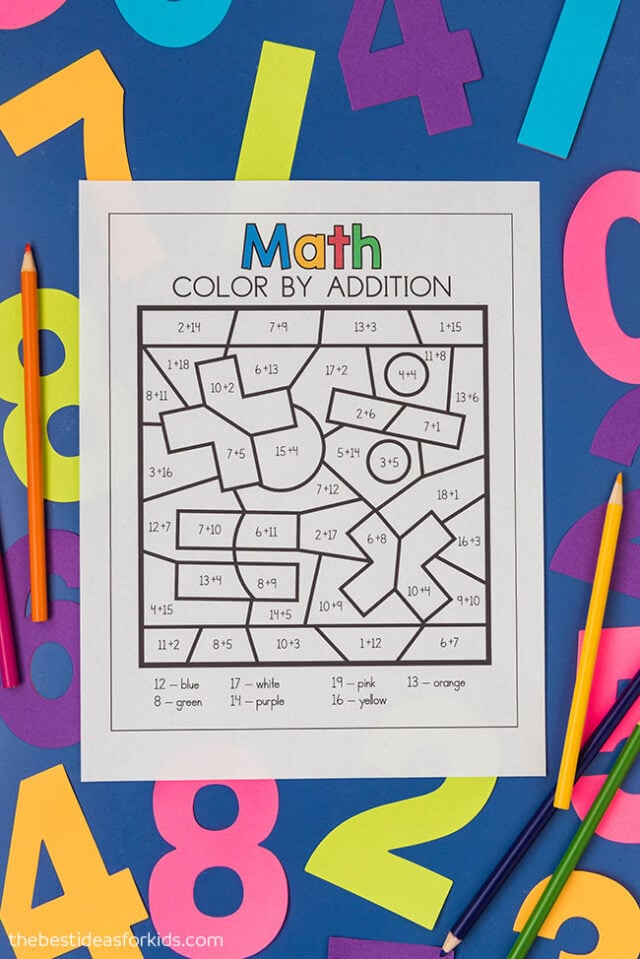
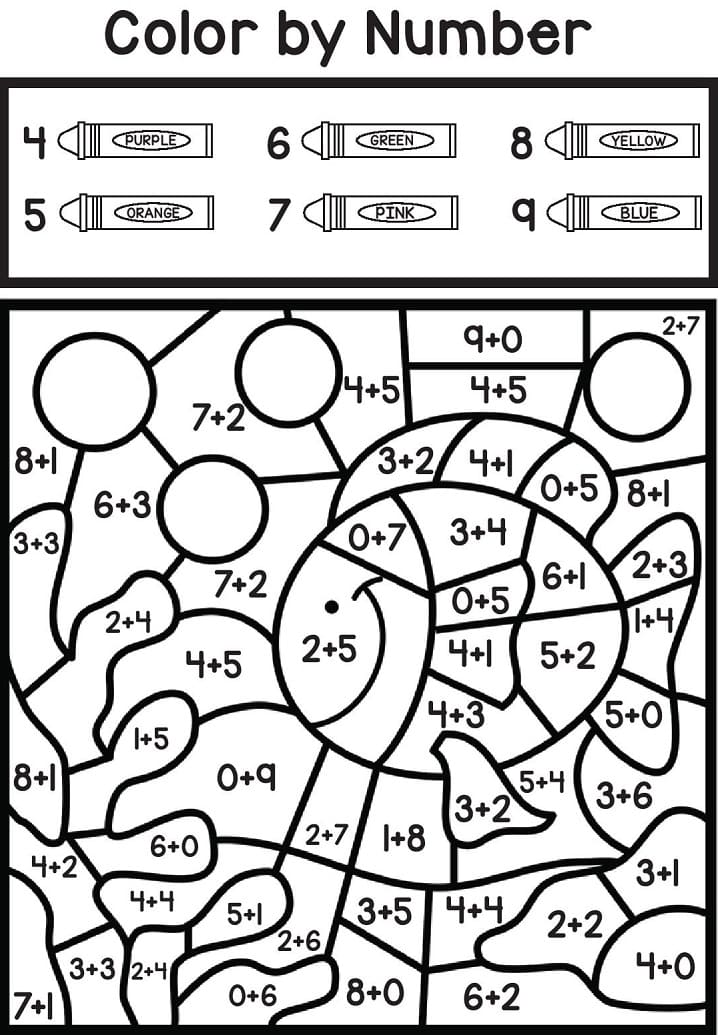
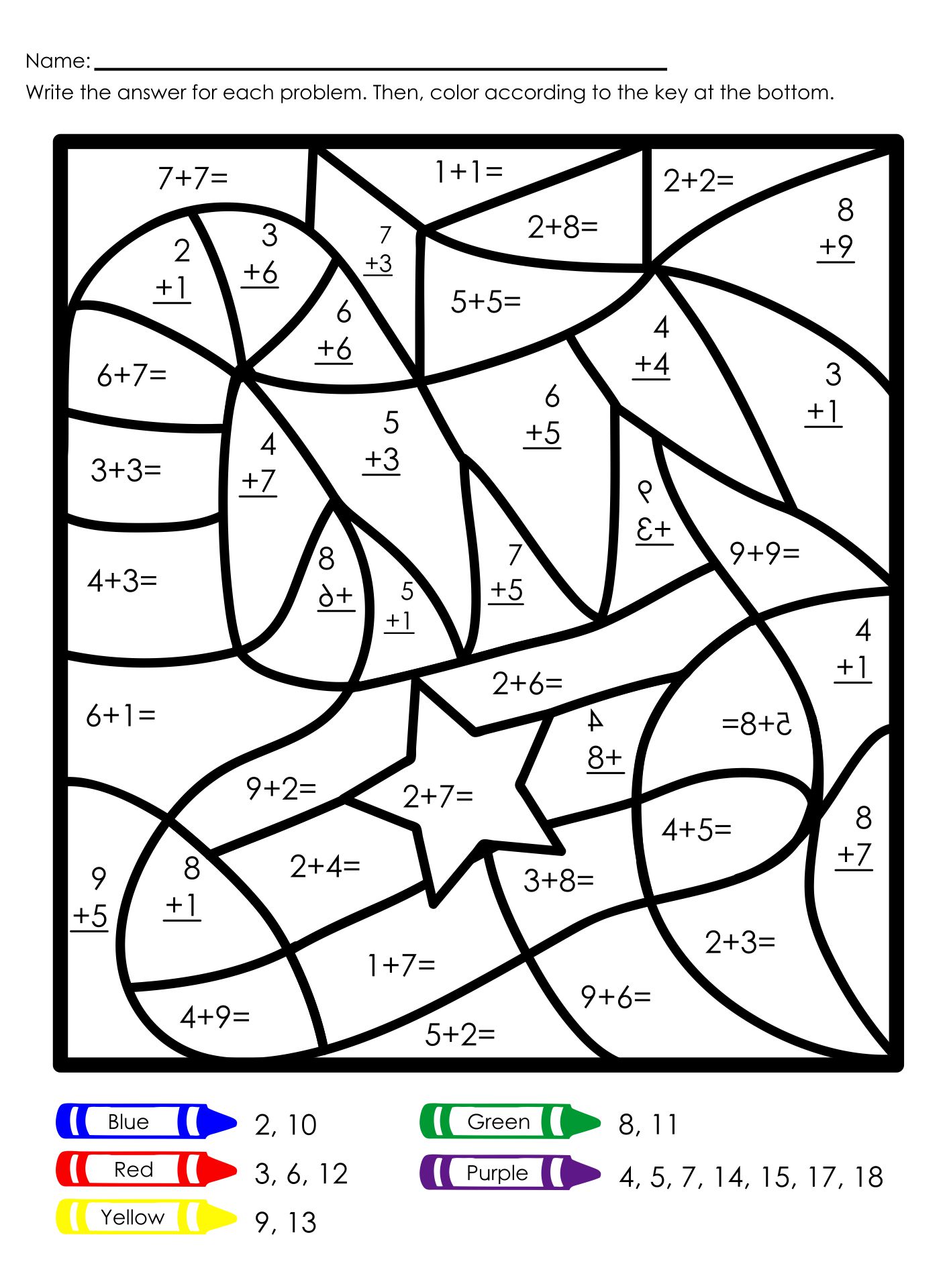
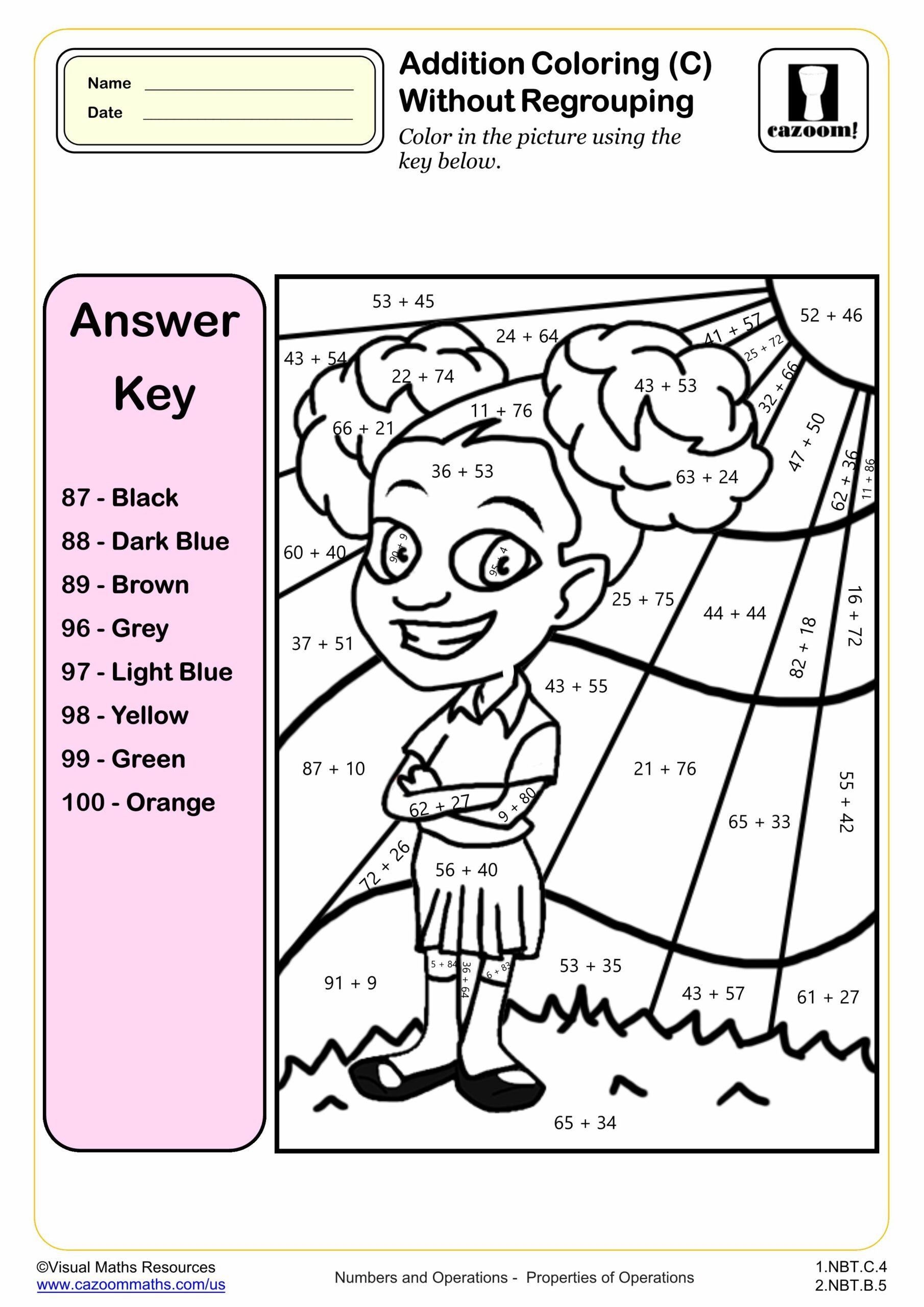
These worksheets typically feature a blend of visual and numerical elements designed to engage young minds. Core Exercises: Each sheet presents a series of simple addition problems tailored for the kindergarten level, focusing on sums within 10 or 20. These problems often utilize visual aids like pictures or objects to represent the numbers being added, making the concept more concrete and accessible. Interactive Elements: Once the addition problem is solved, a corresponding section of the image can be colored in according to a predetermined key. For example, each answer might be assigned a specific color; if the answer to “2 + 3” is “5,” all areas labeled “5” would be colored blue. This interactive component reinforces the association between the problem, its solution, and a visual representation. This encourages active learning and keeps children motivated. The layout is designed to be simple and uncluttered, minimizing distractions and promoting focus. The directions are clear and concise, allowing children to complete the activities independently with minimal supervision, thus building confidence and self-reliance.
Tips and Complementary Resources
To maximize the effectiveness of these resources, it is important to integrate them thoughtfully into a learning schedule. Daily Practice Tips: Short, focused sessions are preferable to lengthy ones. Fifteen to twenty minutes of daily practice can yield better results than sporadic, longer sessions. Encourage children to verbalize the addition problems as they solve them, reinforcing their understanding. Pairing with Other Resources: These worksheets can be effectively supplemented with other learning materials, such as number flashcards, counting blocks, or interactive math games. Furthermore, incorporating real-world examples of addition, such as counting toys or snacks, can help solidify the concepts. Celebrate successes and focus on the learning process rather than solely on the outcome. Positive reinforcement can foster a love of learning and build confidence in their mathematical abilities. This creates a supportive environment where children feel comfortable making mistakes and learning from them.
Conclusion
These resources represent a valuable tool for introducing young learners to the world of addition. By combining mathematical practice with creative expression, it offers a unique and engaging learning experience. The benefits extend beyond simple arithmetic skills, fostering fine motor skills, visual acuity, and a positive attitude toward mathematics. Its structure and interactive elements promote active learning and independent problem-solving. Integrating these resources into a well-rounded curriculum, supplemented with other learning materials and real-world examples, can provide a solid foundation for future mathematical success. Encourage frequent use, celebrate progress, and focus on fostering a love of learning. Explore other educational resources like number tracing activities or shape recognition games to further enhance their early learning experiences.
Printable Coloring Page Previews



Key Specifications & Age-Group Overview
| Age / Grade Group | Target Skill Focus | Recommended Medium |
|---|---|---|
| Toddlers (Ages 2–4) | Hand-eye coordination & broad motor grasp | Jumbo crayons & washable finger paints |
| Early Elementary (Ages 5–7) | Line boundaries & fine pencil control | Standard colored pencils & fine-tip markers |
| Intermediate (Ages 8+) | Color blending, shading & artistic patience | Watercolor pencils, gel pens & dual-brush markers |
Images References :
Discover more printable learning activities by visiting our full Shape and Color Worksheets archive for teachers, homeschoolers, and parents.