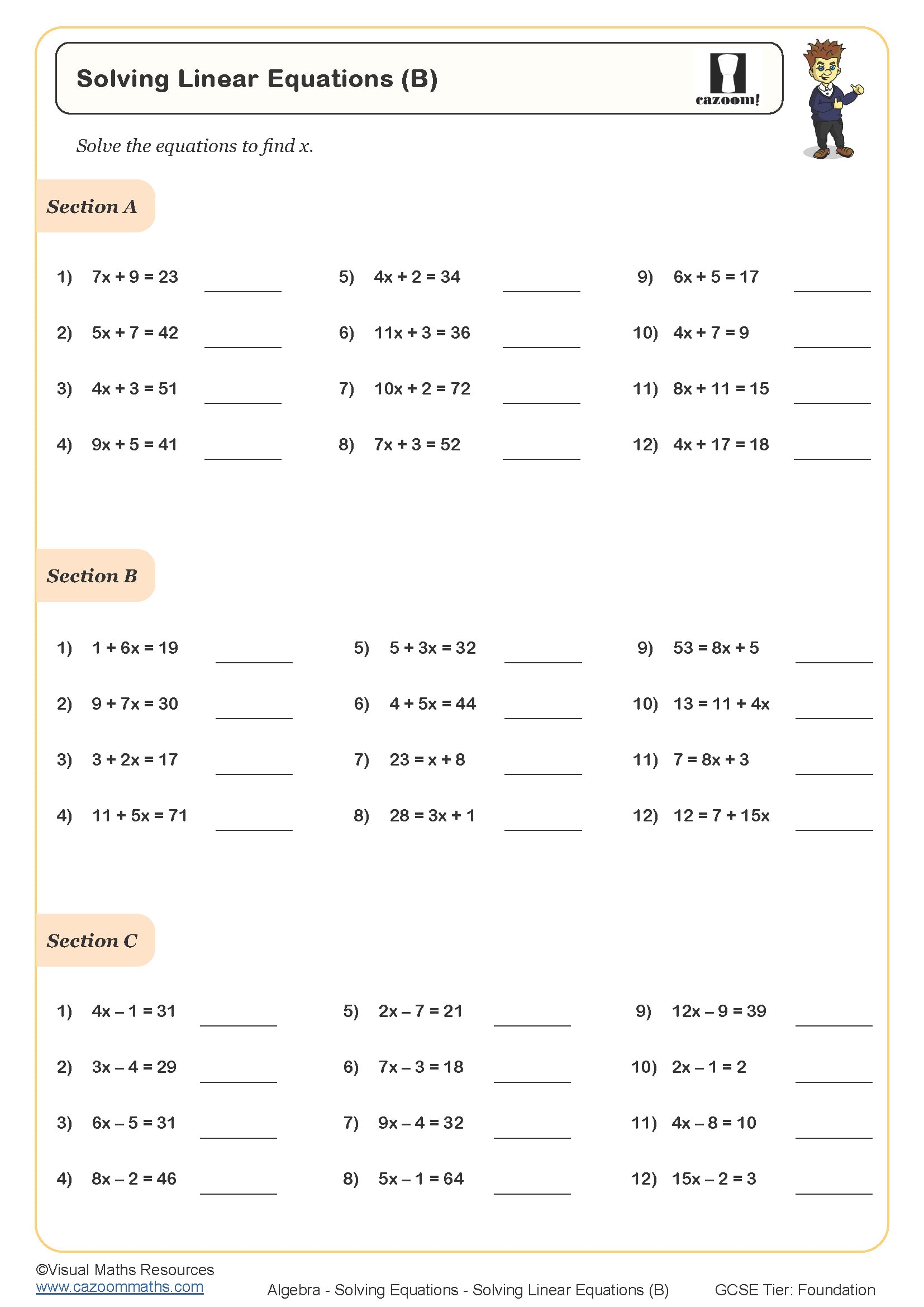
Engaging with structured practice materials is a cornerstone of developing strong mathematical proficiency. For students navigating the complexities of middle school mathematics, specially designed instructional documents serve as invaluable tools. These resources offer a focused approach to mastering essential concepts introduced at a critical developmental stage, ensuring a robust understanding of foundational principles that underpin all future mathematical learning. Consistent engagement with these problem sets solidifies comprehension, boosts confidence, and prepares learners for more advanced topics. Explore more in our Math Worksheets collection.
💡 Educational Key Takeaways:
- Core Skill: Structured Math 7th Grade Worksheets focused on developing pencil grip, stroke control, and early literacy/math confidence.
- Target Scope: Suited for homeschoolers, preschool, kindergarten, and elementary learners.
- Best Recommendation: Practice 10–15 minutes daily with ergonomic writing tools to reinforce muscle memory without hand fatigue.
The strategic utilization of these educational aids yields numerous benefits. Learners gain direct exposure to a diverse array of problem types, which is essential for reinforcing classroom instruction. Such materials facilitate the development of critical thinking by requiring students to apply various strategies to solve problems. They foster independent learning habits, allowing individuals to work at their own pace and revisit challenging areas as needed. Furthermore, regular practice through these exercises enhances problem-solving skills, improves computational fluency, and cultivates a deeper appreciation for the logical structures inherent in mathematical reasoning. For more related activities, check out our Second Grade Math Worksheet.
Typically, these learning tools are organized to cover the breadth of the seventh-grade mathematics curriculum. Content often includes sections dedicated to rational numbers, encompassing operations with integers, fractions, and decimals. Proportions and ratios are frequently explored through word problems and application-based tasks. Early algebraic concepts, such as expressions, equations, and inequalities, are introduced with step-by-step practice. Geometry topics, including area, perimeter, volume, and angles, are presented through visual diagrams and measurement problems. Finally, data analysis, statistics, and probability exercises ensure a comprehensive review of key statistical concepts. Discover more free resources across our collection library.
To maximize the effectiveness of these practice materials, a structured approach is recommended. Begin by reviewing the relevant lesson or chapter in a textbook or class notes before attempting the problems. Work through each exercise systematically, showing all steps of the solution process; this practice aids in identifying errors and understanding logical flow. If a problem proves challenging, refer back to examples or seek clarification rather than becoming discouraged. Upon completion, verify answers against a solution key. Critically review any incorrect responses to pinpoint the specific area requiring further study. Consistent, short study sessions are generally more effective than infrequent, long ones.
Beyond the primary application, these curriculum-aligned problem sets can be integrated with other learning resources for enhanced understanding. Consider pairing them with interactive online tutorials, educational videos, or group study sessions. Exploring variations of problems or creating similar exercises can deepen conceptual understanding. For those seeking further challenges or additional practice in specific areas, a wider collection of similar learning supplements is often available, targeting different aspects of the middle school curriculum. Utilizing diverse resources creates a well-rounded and resilient understanding of mathematical principles.
In conclusion, the regular and thoughtful engagement with practice sheets tailored for the seventh-grade curriculum represents a crucial investment in a student’s mathematical journey. These resources offer a clear pathway to skill development, critical thinking enhancement, and concept mastery. Their structured format and diverse content make them indispensable for reinforcing classroom learning and building a solid foundation for future academic success. Learners are strongly encouraged to explore and download a range of these valuable educational instruments to support their continuous growth in mathematics.
Developmental Milestone & Activity Table
| Development Stage | Recommended Daily Duration | Primary Learning Objective |
|---|---|---|
| Preschool & Pre-K | 10 – 15 Minutes | Pencil grip development & basic pre-stroke lines |
| Kindergarten | 15 – 20 Minutes | Letter/number formation & spatial line awareness |
| Early Elementary (Grade 1–2) | 20 – 30 Minutes | Fluency, sentence construction & neatness |
Images References