

Introduction and Importance of Maths Word Problems for Year 2
Mathematical literacy forms a crucial building block in a child’s development. Early exposure to mathematical concepts, particularly through engaging problem-solving exercises, lays a strong foundation for future academic success. Problem-solving develops critical thinking, analytical skills, and the ability to apply learned concepts to real-world situations. For children in year 2, story-based mathematical challenges present an accessible and stimulating way to grasp fundamental arithmetic principles. These exercises encourage students to identify relevant information, formulate strategies, and arrive at logical solutions. Access to freely available resources focusing on these challenges empowers both educators and parents to support children’s learning journeys effectively. These resources provide opportunities for reinforcing classroom lessons at home, supplementing curriculum content, and fostering a positive attitude towards mathematics early on. Furthermore, they can help to identify areas where a child may be struggling, allowing for targeted intervention and personalized learning support. Ultimately, engaging with accessible and well-designed mathematical problems cultivates a confident and capable young learner.
💡 Educational Key Takeaways:
- Core Skill: Structured Maths Word Problems Year 2 Free focused on developing pencil grip, stroke control, and early literacy/math confidence.
- Target Scope: Suited for homeschoolers, preschool, kindergarten, and elementary learners.
- Best Recommendation: Practice 10–15 minutes daily with ergonomic writing tools to reinforce muscle memory without hand fatigue.
Structure and How It Works
Typically, these resources are structured to reinforce key mathematical concepts relevant to the year 2 curriculum. This may include addition, subtraction, basic multiplication, division, and understanding of units like time and money. The layout often comprises a series of questions presented as short stories or scenarios. Core Exercises: These typically involve applying arithmetic operations to solve practical problems. For example, a question might involve calculating the total cost of several items or determining how many objects remain after some are removed. Visual Aids: Many resources incorporate visual aids, such as pictures or diagrams, to enhance understanding and engagement, particularly for younger learners. These visuals can help to illustrate the problem and make it more accessible. Interactive Elements: While not always present, some resources offer interactive elements, such as drag-and-drop activities or fill-in-the-blank exercises, to make the learning experience more dynamic. Answer keys are usually provided to allow for self-assessment or parental guidance. The challenges are graded in difficulty, allowing learners to progress at their own pace and build confidence as they master each concept. The focus is on understanding the process of solving the problem rather than simply arriving at the correct answer. Related guide: Roblox Math Worksheets.
Tips and Complementary Resources
To maximize the effectiveness of these exercises, several practical tips can be implemented. Daily Practice Tips: Short, regular practice sessions are more effective than infrequent, lengthy sessions. Aim for 15-20 minutes of focused engagement per day. Encourage children to read each problem carefully and identify the key information. Emphasize the importance of showing their working, as this helps to identify errors and understand their thought process. Celebrate effort and progress, rather than solely focusing on correct answers. This fosters a positive learning environment and encourages perseverance. Pairing with Other Resources: Supplement these resources with hands-on activities, such as using real objects to represent the numbers in a problem. Utilize online educational games and videos to reinforce mathematical concepts in a fun and engaging way. Consider creating personalized problems based on the child’s interests to further enhance engagement. Resources such as number lines and counters can also aid in understanding and solving the problems.
Conclusion
Engaging with mathematical problems designed for year 2 students offers a multitude of benefits, from solidifying basic arithmetic skills to developing critical thinking and problem-solving abilities. These resources, when utilized effectively, can foster a positive and confident attitude towards mathematics in young learners. By providing opportunities for practical application and reinforcing classroom lessons, they empower children to connect mathematical concepts to real-world scenarios. The accessibility of these resources makes them a valuable tool for both educators and parents seeking to support children’s mathematical development. Encouraging consistent engagement with these types of exercises can significantly contribute to a child’s overall mathematical literacy and future academic success. In addition to these specifically designed exercises, consider exploring other readily available educational resources such as online tutorials, interactive games, and supplemental learning materials to further enrich the learning experience and address individual learning needs.
Developmental Milestone & Activity Table
| Development Stage | Recommended Daily Duration | Primary Learning Objective |
|---|---|---|
| Preschool & Pre-K | 10 – 15 Minutes | Pencil grip development & basic pre-stroke lines |
| Kindergarten | 15 – 20 Minutes | Letter/number formation & spatial line awareness |
| Early Elementary (Grade 1–2) | 20 – 30 Minutes | Fluency, sentence construction & neatness |
Images References


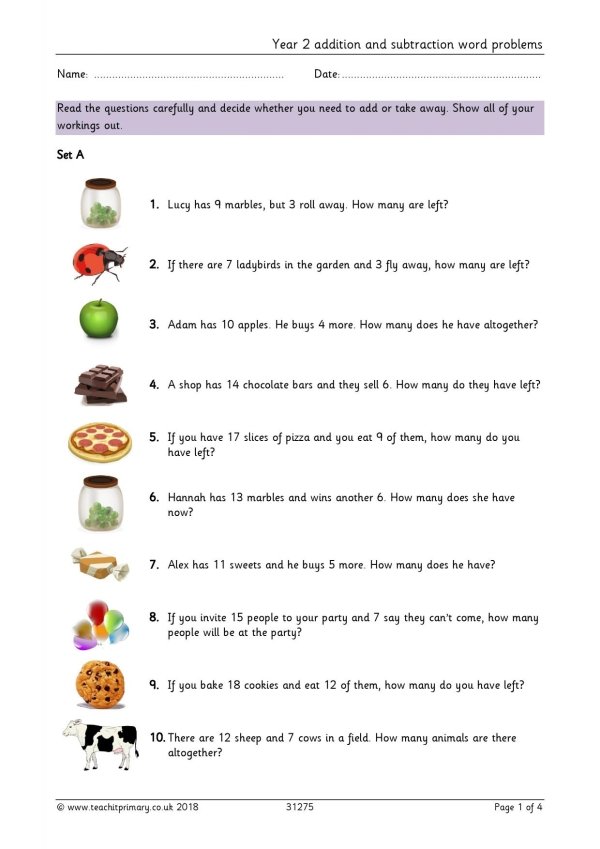


Discover more printable learning activities by visiting our full Fun and Seasonal Math Worksheets archive for teachers, homeschoolers, and parents.


