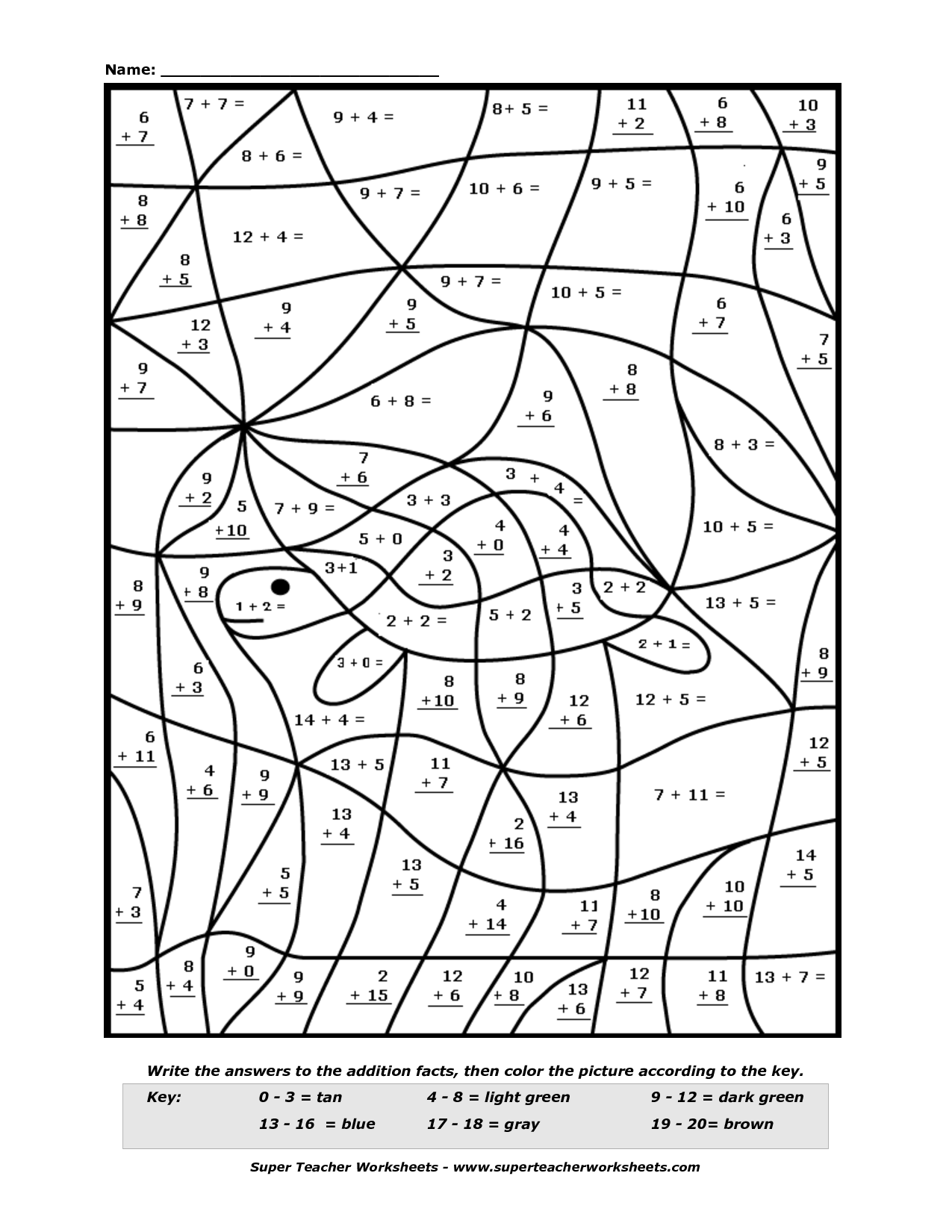
Introduction and Importance of Color by Addition for Kindergarten
Introducing fundamental mathematical concepts to kindergarteners requires methods that are both engaging and accessible. Worksheets designed around adding single-digit numbers and associating those sums with specific colors offer a valuable tool for educators and parents alike. This approach transforms the abstract concept of addition into a visually stimulating activity, making learning more enjoyable and effective. By linking numerical calculations to the creation of colorful images, children develop a stronger connection between numbers and their concrete representations. This early exposure to arithmetic through art can foster a positive attitude toward mathematics, reducing anxiety and increasing confidence as they progress to more complex topics. The process also enhances fine motor skills and concentration, laying a solid foundation for future academic success. Integrating this type of activity into early childhood education supports holistic development, combining cognitive and artistic skills in a cohesive learning experience. Furthermore, successful completion of these exercises provides a sense of accomplishment, reinforcing positive learning behaviors.
💡 Activity Key Takeaways:
- Core Focus: Printable Color By Addition Kindergarten designed for creative expression and fine-motor coordination.
- Target Scope: Ideal for toddlers, preschool, kindergarten, and classroom art activities.
- Best Recommendation: Use standard heavy printer paper (24–28 lb) or cardstock for vibrant results with crayons, colored pencils, or washable markers.
Structure and How It Works
These worksheets typically feature an image divided into various sections, each labeled with a simple addition problem. The child solves the problem and then uses a color key to determine which color corresponds to the answer. For instance, if a section contains “2 + 1” and the color key indicates that “3 = Blue,” the child will color that section blue. Core Exercises: The primary activities involve single-digit addition problems (e.g., 1+1, 2+3, 4+0). These problems are designed to reinforce basic addition facts within the range of numbers familiar to kindergarteners. Interactive Elements: In addition to the numerical problems, some worksheets include themed illustrations, such as animals, shapes, or seasonal images, further enhancing engagement. The layout is generally simple and uncluttered, with clear instructions and a visually appealing design. Variations might include progressively more complex addition problems as the child’s skills improve. The color key is usually presented at the top or bottom of the page, ensuring easy reference. These activities are not only educational but also provide an opportunity for creative expression, turning math practice into a fun and relaxing experience.
Tips and Complementary Resources
To maximize the benefits of these worksheets, it’s crucial to provide clear guidance and support. Start by ensuring the child understands the basic concept of addition and can count accurately. Daily Practice Tips: Encourage short, focused sessions rather than long, overwhelming ones. A 15-20 minute session can be highly effective. Celebrate successes and offer positive reinforcement for effort, regardless of whether the answers are all correct. Make the activity even more engaging by using a variety of coloring tools, such as crayons, colored pencils, or markers. Pairing with Other Resources: Supplement these worksheets with hands-on activities like using manipulatives (e.g., counting bears, blocks) to physically represent the addition problems. Reading age-appropriate books about numbers and addition can also be beneficial. Consider using online educational games and videos that reinforce the same concepts in a different format. Remember, the goal is to create a positive and enjoyable learning experience that fosters a love of mathematics.
Conclusion
In summary, engaging with addition-based coloring activities offers a fun and effective way for kindergarteners to grasp fundamental math concepts. The combination of arithmetic and art creates a stimulating learning environment that fosters both cognitive and creative development. By transforming simple addition problems into a colorful visual experience, these resources make learning more accessible and enjoyable for young children. The activity promotes not only mathematical skills but also fine motor skills, concentration, and a positive attitude toward learning. Encouraging the use of these resources can significantly contribute to a child’s readiness for more advanced mathematical concepts in the future. Explore readily available resources such as online printable worksheets or educational workbooks containing similar activities. Incorporating these colorful exercises into a kindergarten curriculum or home learning environment can provide a valuable and enjoyable foundation for future mathematical success. Parents and educators are encouraged to implement these strategies to create a positive and lasting impact on children’s early learning experiences.
Key Specifications & Age-Group Overview
| Age / Grade Group | Target Skill Focus | Recommended Medium |
|---|---|---|
| Toddlers (Ages 2–4) | Hand-eye coordination & broad motor grasp | Jumbo crayons & washable finger paints |
| Early Elementary (Ages 5–7) | Line boundaries & fine pencil control | Standard colored pencils & fine-tip markers |
| Intermediate (Ages 8+) | Color blending, shading & artistic patience | Watercolor pencils, gel pens & dual-brush markers |
Images References :
Discover more printable learning activities by visiting our full Shape and Color Worksheets archive for teachers, homeschoolers, and parents.