Introduction and Importance of Color-Coded Arithmetic Activities
These activities present a novel and engaging approach to reinforcing fundamental mathematical concepts. Their importance lies in transforming rote learning into an enjoyable and visually stimulating experience. At home, these sheets offer a valuable supplementary resource for solidifying classroom learning, fostering independent practice, and identifying areas where a child may require additional support. In a school setting, these can serve as effective tools for differentiated instruction, catering to varying learning styles and paces. For self-study, they provide a structured and motivating way to review and practice mathematical skills, building confidence and a positive attitude toward mathematics. The blend of arithmetic and art encourages a holistic approach to learning, making it more accessible and less daunting for learners who may struggle with traditional methods. The visual appeal can also enhance memory retention and improve overall engagement with the subject matter.
💡 Activity Key Takeaways:
- Core Focus: Printable Color By Number Math Pages designed for creative expression and fine-motor coordination.
- Target Scope: Ideal for toddlers, preschool, kindergarten, and classroom art activities.
- Best Recommendation: Use standard heavy printer paper (24–28 lb) or cardstock for vibrant results with crayons, colored pencils, or washable markers.
Structure and How It Works
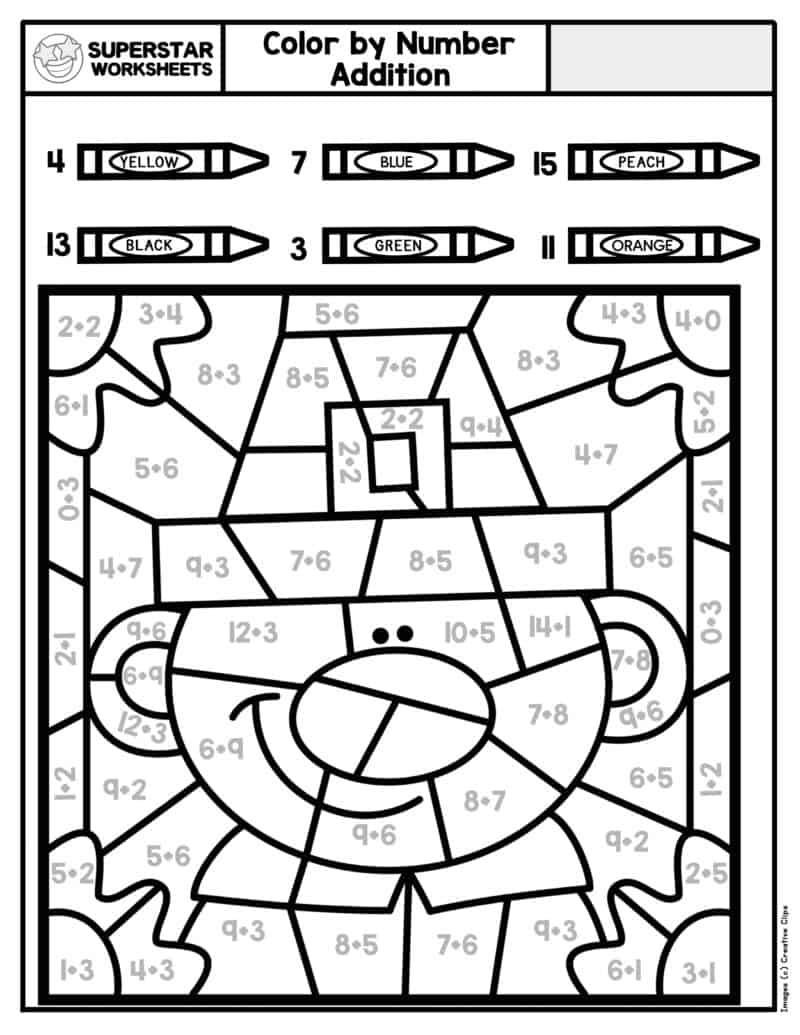
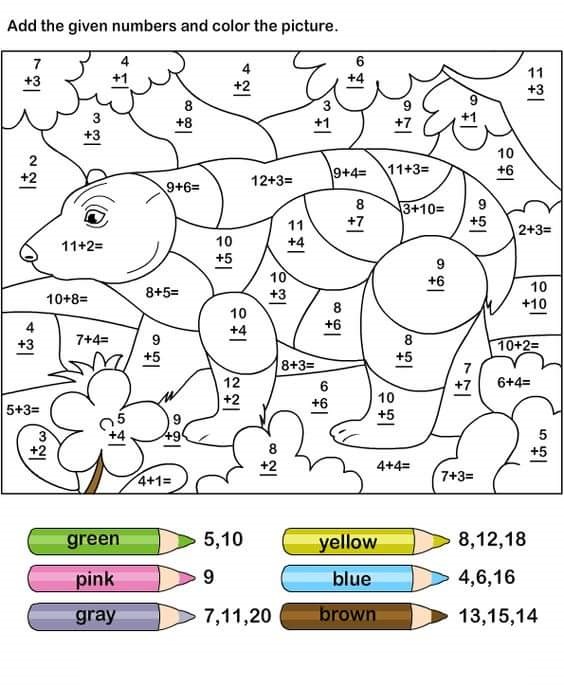
The typical layout consists of an image divided into sections, each labeled with a number. Below the image, a series of mathematical problems is presented. The solution to each problem corresponds to a specific color indicated in a color key. Once a learner solves a problem, they locate the corresponding number within the image and color that section accordingly. Core Exercises: These worksheets generally incorporate basic operations such as addition, subtraction, multiplication, and division, as well as more advanced concepts depending on the targeted age group. Fractions, decimals, and simple algebra may also be included. Interactive Elements: The visual element is a key interactive component, providing immediate feedback. As the student correctly solves the problems, the image gradually reveals itself, offering a sense of accomplishment and motivating further engagement. The format allows for self-checking, as an incorrect answer will result in an incongruous color, prompting the learner to revisit their calculations.
Tips and Complementary Resources
To maximize the benefit of these activities, a few practical tips can be employed. Daily Practice Tips: Incorporate these worksheets into a regular study routine, even if only for 15-20 minutes each day. Consistency is key to reinforcing mathematical skills. Start with simpler sheets and gradually progress to more complex ones as proficiency increases. Encourage learners to show their work, even if the problems seem straightforward. This allows for identification of errors and promotes a deeper understanding of the underlying concepts. Pairing with Other Resources: These pages can be effectively paired with traditional textbooks, online tutorials, and educational games. Consider using manipulative like counters or number lines alongside the sheets to provide a concrete representation of the mathematical concepts. Real-world application problems can also be introduced to further contextualize learning and demonstrate the practical relevance of mathematics.
Conclusion
In summary, activities that combine arithmetic with a coloring component offer a uniquely beneficial approach to learning and reinforcing mathematical skills. These resources enhance engagement, promote a positive attitude towards mathematics, and cater to diverse learning styles. The self-checking nature and visual appeal contribute to a more effective and enjoyable learning experience. Immediate implementation of these sheets in a child’s learning routine could provide significant improvements in their understanding and retention of mathematical concepts. Supplementing other learning materials with these is a smart idea. Consider exploring variations that focus on specific mathematical topics or skills to further tailor the learning experience. The blend of art and arithmetic provides a well-rounded and engaging way to solidify mathematical foundations.
Key Specifications & Age-Group Overview
| Age / Grade Group | Target Skill Focus | Recommended Medium |
|---|---|---|
| Toddlers (Ages 2–4) | Hand-eye coordination & broad motor grasp | Jumbo crayons & washable finger paints |
| Early Elementary (Ages 5–7) | Line boundaries & fine pencil control | Standard colored pencils & fine-tip markers |
| Intermediate (Ages 8+) | Color blending, shading & artistic patience | Watercolor pencils, gel pens & dual-brush markers |
Images References :
Discover more printable learning activities by visiting our full Shape and Color Worksheets archive for teachers, homeschoolers, and parents.